The Serra de Tramuntana: Mallorca’s Other side
Peering down in confusion upon the spine of dramatic peaks from the window seat, I hear the pilot announce that the crew should prepare for landing. As we begin our descent, I realise I hadn’t fully prepared. We’d bought cheap last-minute tickets the night before in a desperate attempt to catch a break from the perpetual leaden gloom of British weather. Why else come?
What I realised in that moment was that this place was not what I’d been sold – this was an island for sunseekers, holidaymakers, white-sand beaches, right? Just another tourist hub with endless sunshine. I could see the clear, turquoise bays from my window seat… but that was expected. I knew nothing else of this place.
Forget what you know about Mallorca.
Its reputation for overzealous stags and hens, or budget all-inclusive packages, has dominated its image for decades. You’d be forgiven for thinking, like me, that Mallorca’s only allure lies simply in those crystalline coves and bays. The classic image of a sun-soaked Mediterranean island – perhaps with a cocktail (or three) thrown in for good measure.
A Complex Geography
Don’t get me wrong, this island has its fair share of incredible coastal gems that are more than worth the effort. However, despite its size, Mallorca boasts a far more complex geography and a deep culture and history.
As the largest of Spain’s Balearic archipelago (which includes the islands of Menorca, Ibiza, Formentera and Cabrera), Mallorca showcases a wealth of geographic features, including dramatic cliffs, pristine beaches, rose-hued salt pans, prehistoric caves, and soaring mountains. The result is an island landscape that rewards every turn.
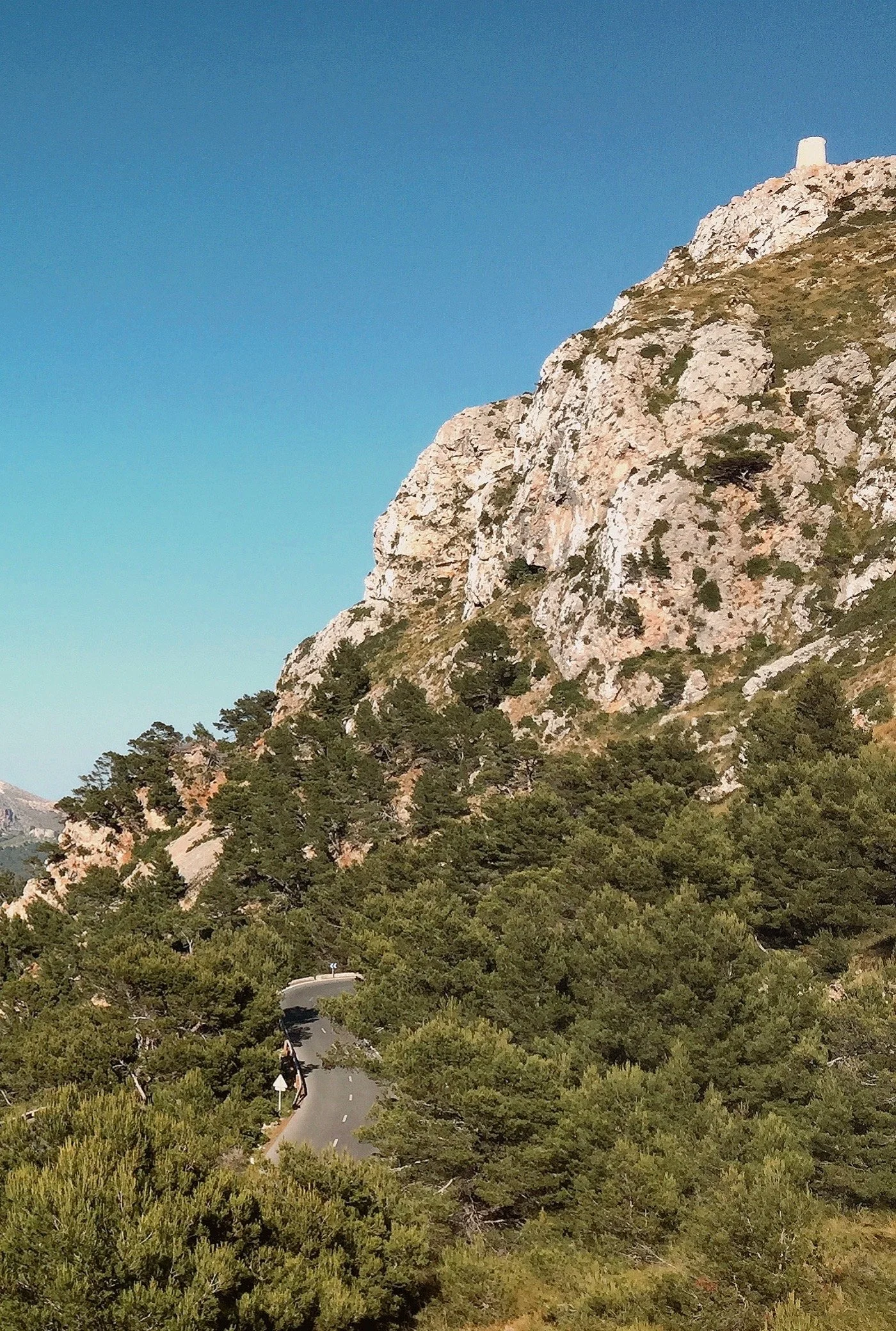
Among these, the most breathtaking is the Serra de Tramuntana, the rugged and captivating 90km mountain range that spans the entirety of the island’s northwest coast. The drama of its craggy peaks and precipitous cliff faces plunging into a turquoise abyss drew me in from the start, despite the tiny portal of the plane window. Puig Major, the Tramuntana’s highest peak, towers at an impressive 1445m, standing sentinel over the limestone sierra littered with picturesque sand-hued villages, monasteries, and terraced olive groves.

Layers of History
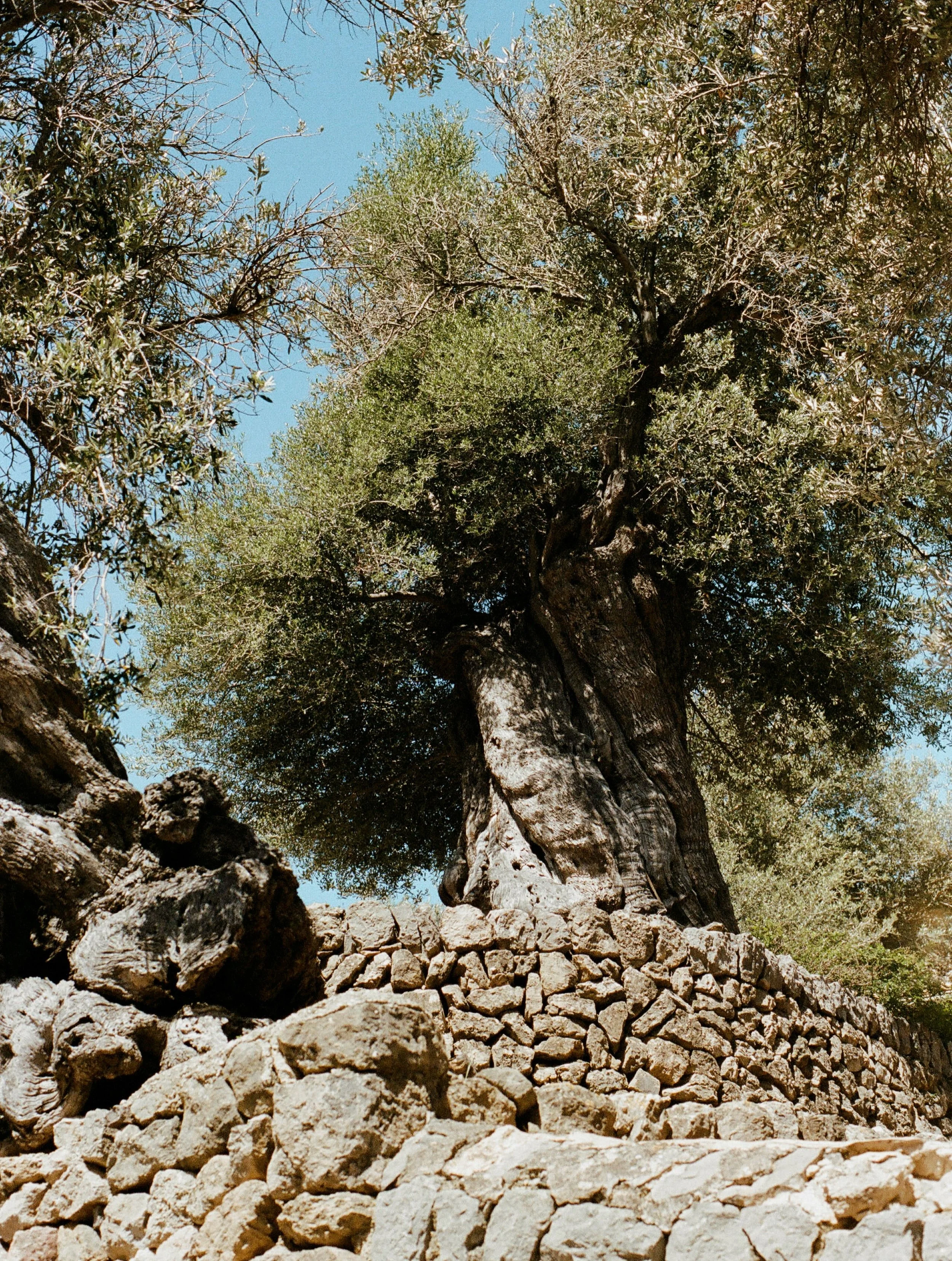
The region has a deep cultural history, and as such was declared a UNESCO World Heritage site for its wild natural beauty and distinct cultural significance in 2011. Here you’ll find a rich tapestry of Phoenician, Roman, Arabic and Christian influences dating back millennia, evident in the labyrinthine cobbled streets of the villages, towering feudal castillos, and dry-stone terraces that tame the steep slopes for agriculture.
Each visiting civilisation left an imprint on the landscape; without the Phoenicians, viticulture and olives would not exist here. After them, the Romans further advanced the production of olive oil and wine, and then the conquering Moors brought almonds, oranges, apricots, figs and carob. All of which still grow in the mosaic ribbons of terraced farms that adorn the landscape today.
The latter also significantly influenced the architecture, culture and language during their 350-year rule over the Balearics, as they did in much of the Iberian Peninsula. Mountain village names such as Valldemossa, Sóller, Alaró, Deià, Banyalbufar serve as enduring reminders of this historical influence, as do delicacies made from almond, apricot, citrus, fig, honey and cinnamon throughout the island. I tasted this before I knew the history - the Mallorquin almond cake (Gató d'ametlla) I’ve enjoyed so many times with un café in a village square turned out to have roots stretching back centuries.
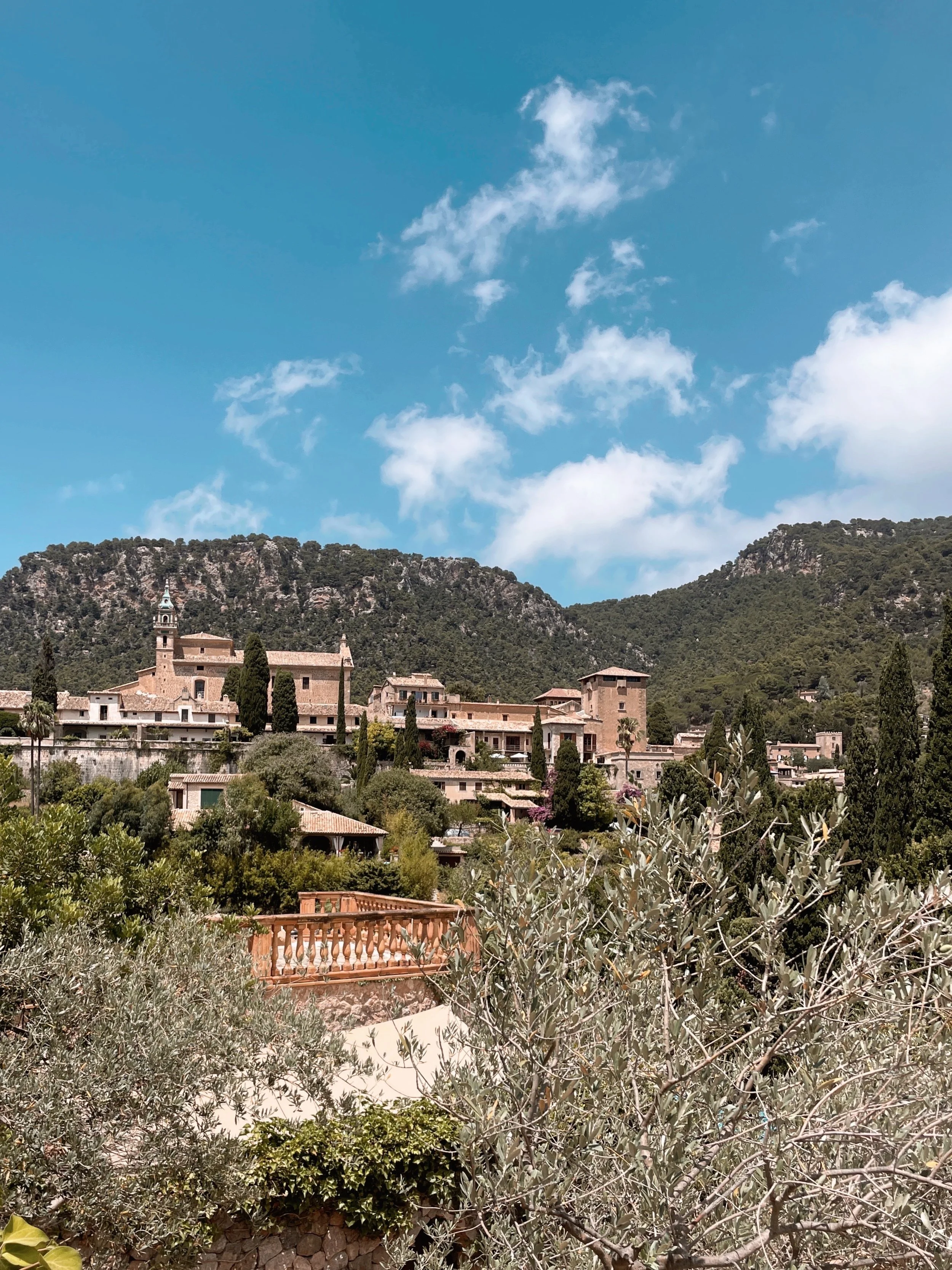
Valldemossa (comes from the Arabic ‘Wali Musa’)
A Place of Healing and Creativity
The draw of the Serra de Tramuntana feels as old as time. Its geological grandeur has attracted notable creatives, poets and musicians over the centuries. The beautiful villages of Valldemossa and Deià were most famously artistic havens for Frederic Chopin and Robert Graves respectively, while the surrealist artist Joan Miró had a deep connection with the island, with the Tramuntana profoundly influencing his later work.
Nowadays, the enticement continues; the area is as popular as ever, with summer seeing throngs of visitors, with literal busloads of tour groups to the likes of Valldemossa. As the heat of summer fades, though, locals, hikers and cyclists alike enjoy all it has to offer at a slower pace.
Depending on who you speak to, this pull is something more than scenic beauty. Locals will tell you the mountains carry a certain energy - a quality in the light, perhaps an ancient energy in the stone, the soil, the forests. Some call it healing. Others point to energy vortices and ley lines. The Tramuntana has long been a place where people come to recover themselves: to write, to paint, to find spiritual calm. And it makes sense; these mountains are where Talayotic shrines have been discovered, dating back to prehistory, while cave-dwelling Christian hermits have also lived here in seclusion and prayer. Even today, these mountains are home to several of Mallorca’s ‘santuaris’; holy refuges and monasteries that have existed here for over 800 years since the Christian conquest in 1231. Standing at 525m, nestled among the sublime heights of the sierra, the Santuari de Lluc is Mallorca’s spiritual home and a pilgrimage site of great significance.
Whether you believe in the mystical or not, there is something undeniably special about standing among peaks that were old before human memory began. Whatever it is, the Serra de Tramuntana commands a respect and adulation that millennia of visitors found impossible to resist. UNESCO seems to concur. I won't pretend to be any different. After all, I was captured by this place by simply looking out of an aeroplane window.
The Essentials...
- Get lost in the drama of the Serra de Tramuntana, Mallorca
- See Mallorca's other side - beauty, culture and history all at once
- Visit ancient sand-hued villages like Valldemossa, Deià, Sóller and Fornalutx
- You'll need a car to explore properly, but main towns and villages have public transport links
- Visit in shoulder season for fewer crowds