Discovering Saints, Sonatas and more in VALLDEMOSSA
The Essentials...
- Meander the historic, winding lanes of this beautiful village
- Uncover deeper layers of Valldemossa such as it's Moorish roots and the tiny chapel of Santa Catalina Thomás, Mallorca's only saint
- For the best places to eat and stay, and for more information about visiting, check out the Guide to Valldemossa
A Valley Shaped by Time
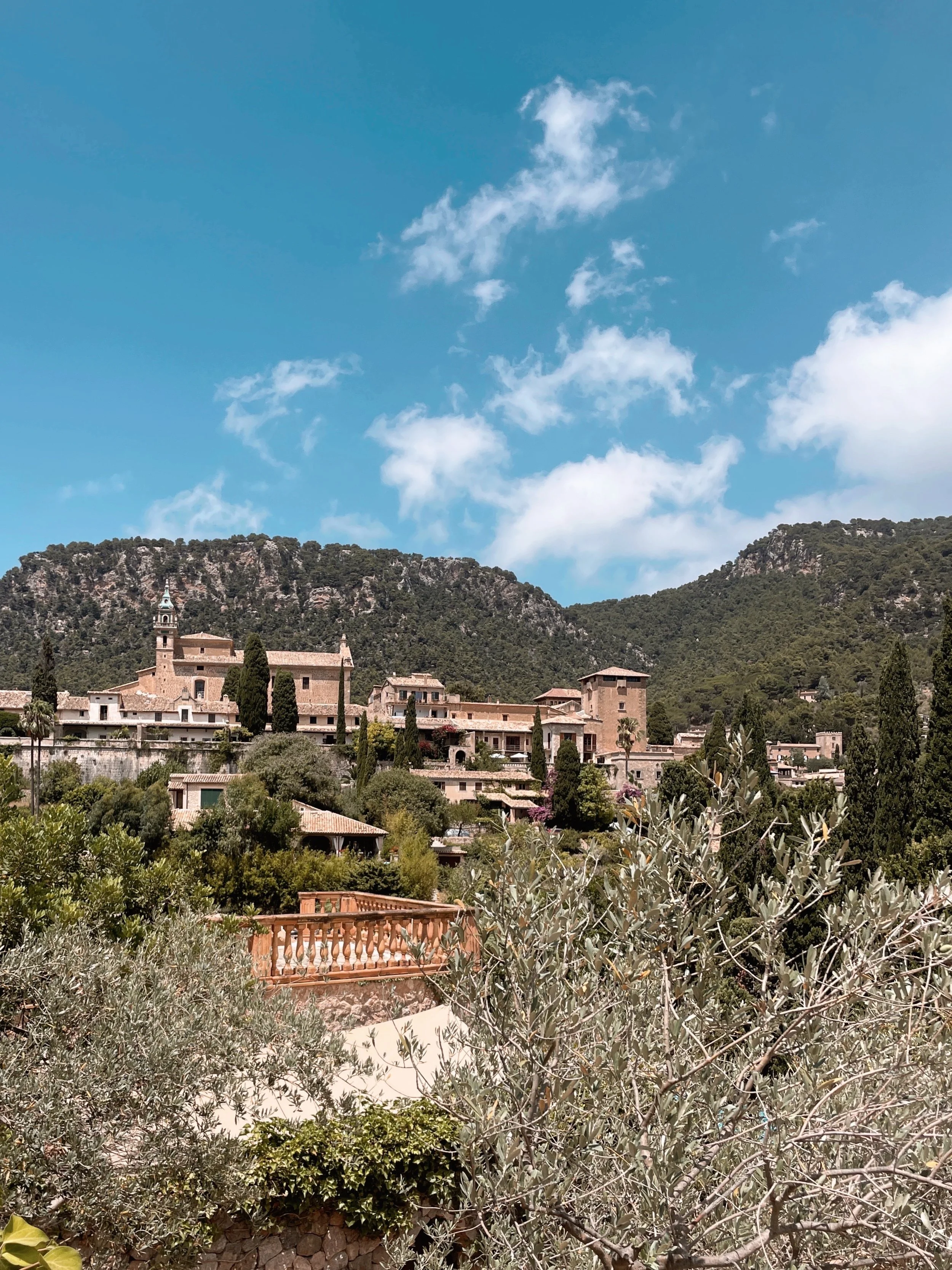
As we rounded the corner, the village finally came into view.
Rising from the rock, resplendent and resolute, as if it had always belonged, Valldemossa perches atop a valley encircled by the rocky peaks of the Serra de Tramuntana. The village almost feels born from the island’s very bedrock itself, a natural consequence of its formation. And it makes sense, it has been here for more than a thousand years.
Towering peaks and a lush valley shaped over time by both nature and man, the valley in which Valldemossa sits aloft is captivating as I gaze across. Drenched in history, dry-stone terraced farms growing almonds and olives lie in harmonious layers, bordered by rows of Mediterranean cypress and dotted with palms. Millennia of inhabitants have shaped this landscape. Most notably the Moors, who made Mallorca their home for 350 years, tamed these steep slopes for agriculture by terracing the terrain and introducing sophisticated irrigation systems on an island with no lakes or rivers. Valldemossa’s name derives from the Arabic Wadi al Musa (Valley of Musa/Moses) and Wali Musa (Governor/Nobelman Musa), reflecting its origins as a Moorish nobleman’s estate.
The Monastery and the Musician
Looking to the town itself, the church tower of the Carthusian Monastery dominates the skyline with its ornate, turquoise-tiled roof. The sun reflects off the glaze, contrasting sharply with the soft, honey-coloured stone of the village buildings. The monastery was originally built as a summer palace for Spanish monarchs in 1309 upon the foundations of the original Arab fortress here, but the baroque church attached and its tiles are a relatively recent addition (1750).
Tourists flock here, drawn not only by its history and architecture, but also by love. A chapter in the love story of Polish composer Frédéric Chopin and French writer Amantine Dupin de Francueil (known by her pen name George Sand) is set amidst the backdrop of 1830s Valldemossa. They famously spent a turbulent winter here, and he completed some of his most beautiful works, including Piano Sonata No. 2. His bust stands in the manicured gardens of the monastery (which are free to visit) and serves as a quiet reminder of the season that helped shape both his music and the village’s enduring draw.
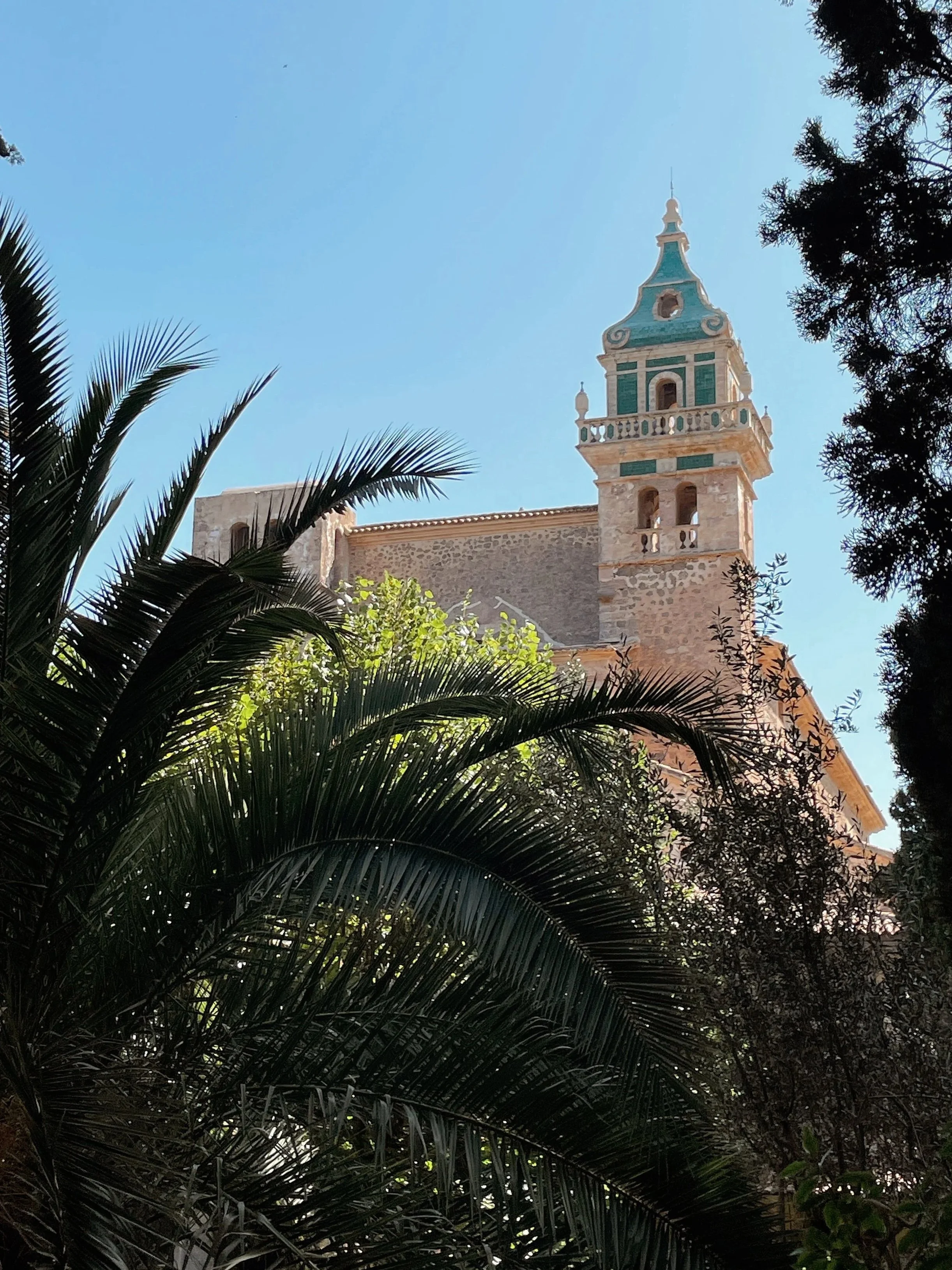
The chapel of the Carthusian Monastery, Valldemossa
Beyond The Crowds
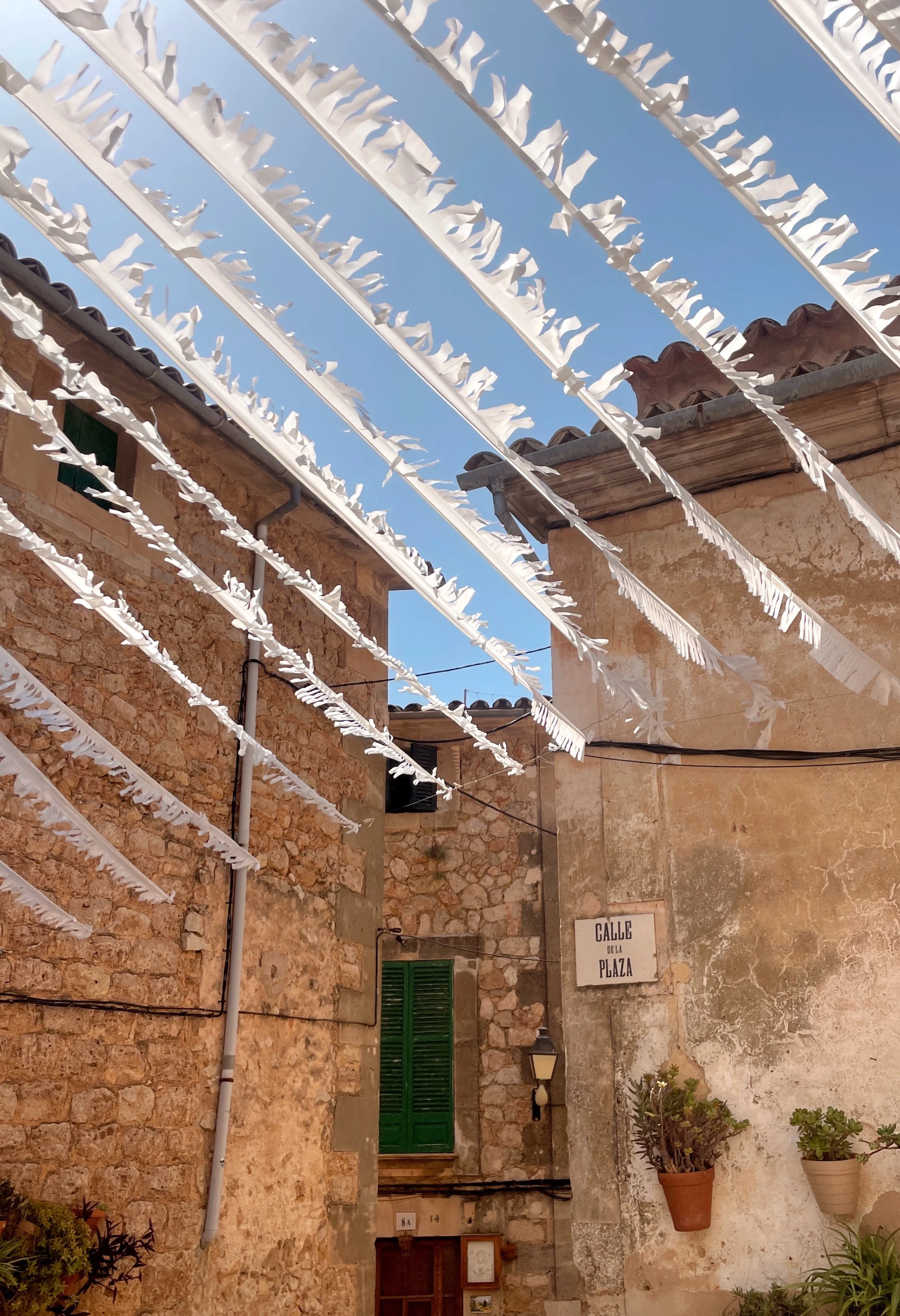
Wandering the narrow, winding streets of the village gently reminds you that Valldemossa’s roots run much deeper, though. A few minutes away from the crowds around the Monastery and the buzz of shops and cafes, I discover an area much more intimate. Vibrant blooms line the timeworn, cobbled lanes of limestone houses, some festooned with garlands of ribbons and flags for the summer fiestas. This small labyrinth of streets is ancient, evident in the tight passageways that were built for nothing except footsteps and small carts, a remnant from the time of the Moors.
It’s almost 35 degrees Celsius, and it’s just gone 11 am. The discovery of a small local bar is a welcome sight and offers us the opportunity to grab a cold drink, and we willingly oblige. We’ve opted for the coldest thing we can - a Granizado de Almendra, a delicious combination of blended ice, sugar and almonds. These are flavours introduced to Spain over a thousand years ago, and ones that it has never let go of.
These streets are tranquil, inviting you to slow down and lose your sense of direction. As such, they start to reveal themselves to you. We pass just a few locals and nosy tourists like ourselves, and we drop our voices to hushed tones in an attempt to preserve the serenity.
We stumble upon a small shrine to a local saint: beyond a stone façade wrapped in greenery lies a modest yet beautifully lit chapel, adorned with flowers and dedicated to Santa Catalina Thomás. This small chapel is impeccable, cared for with obvious devotion. She is Mallorca’s only saint and the patron saint of Valldemossa because she was born there in 1533, in the very house that now holds her shrine.
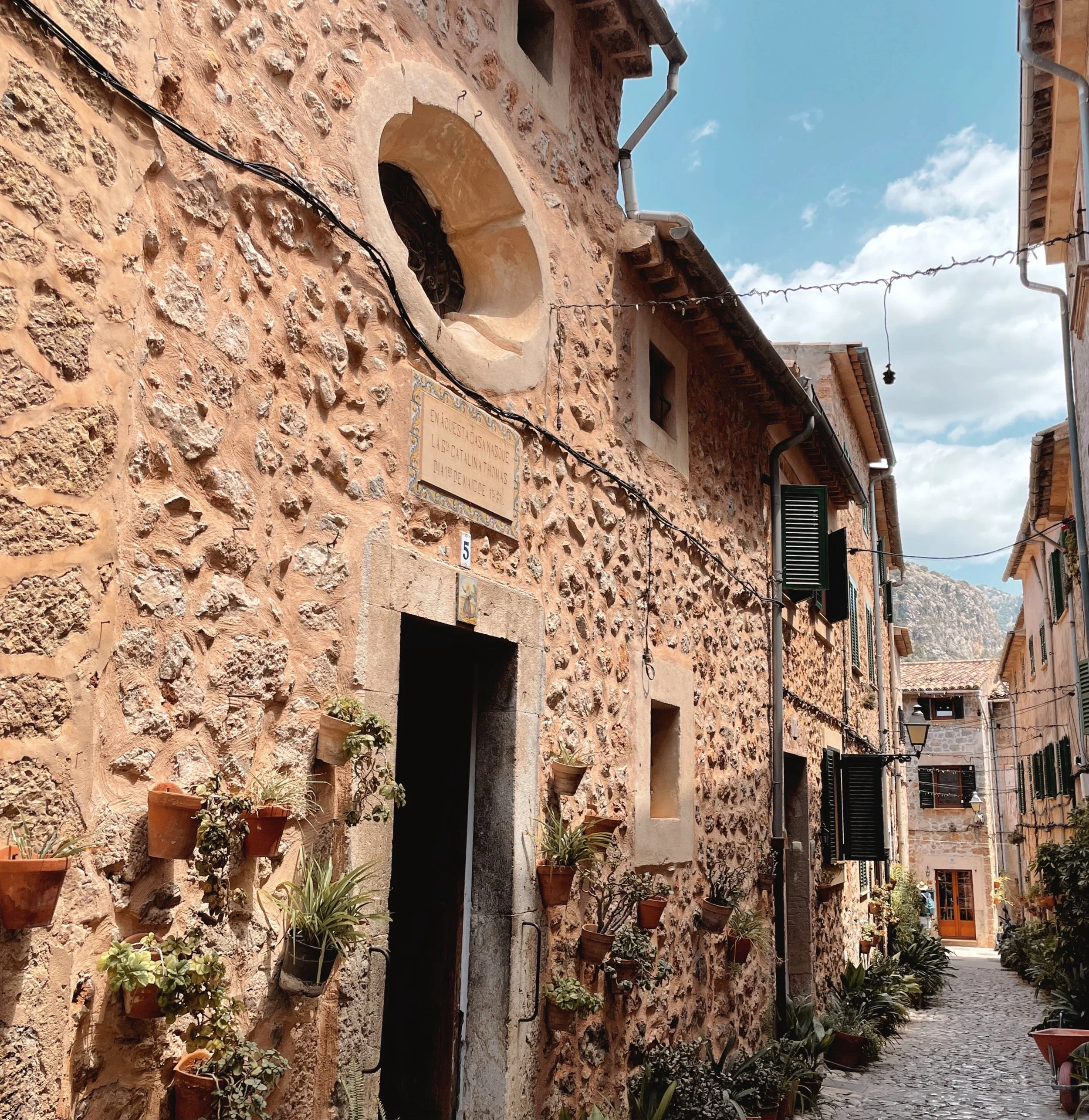
The chapel of Santa Catalina Thomás
As I wander further along the meandering streets, I begin to notice something else. Nearly every beautiful façade bears a decorative hand-painted tile at its entrance, colourful and inviting me to pause and inspect it. In each one, I see a small vignette in colour, and beneath it, the same name…Santa Catalina Thomás. It seems that even after her birth five centuries ago, the village still whispers her name at every turn.
The same could be said of older history hidden all around this village, too, as she is just one layer. The terraced valley, the tight maze of streets, the almonds in our glass, even the glazed tile tradition itself, all trace back further still to the Moors who shaped this place long before the saint or the sonatas.
So, you might come for Chopin and the spectacular views, but tucked away among the hand-painted tiles, candlelit shrines, and maze of ancient streets, you’ll uncover far more of the story. Valldemossa reveals herself slowly, in layers of history. Take your time and let this place unfold around you.