Deià: A Village that Captures Artists. And eventually, me.
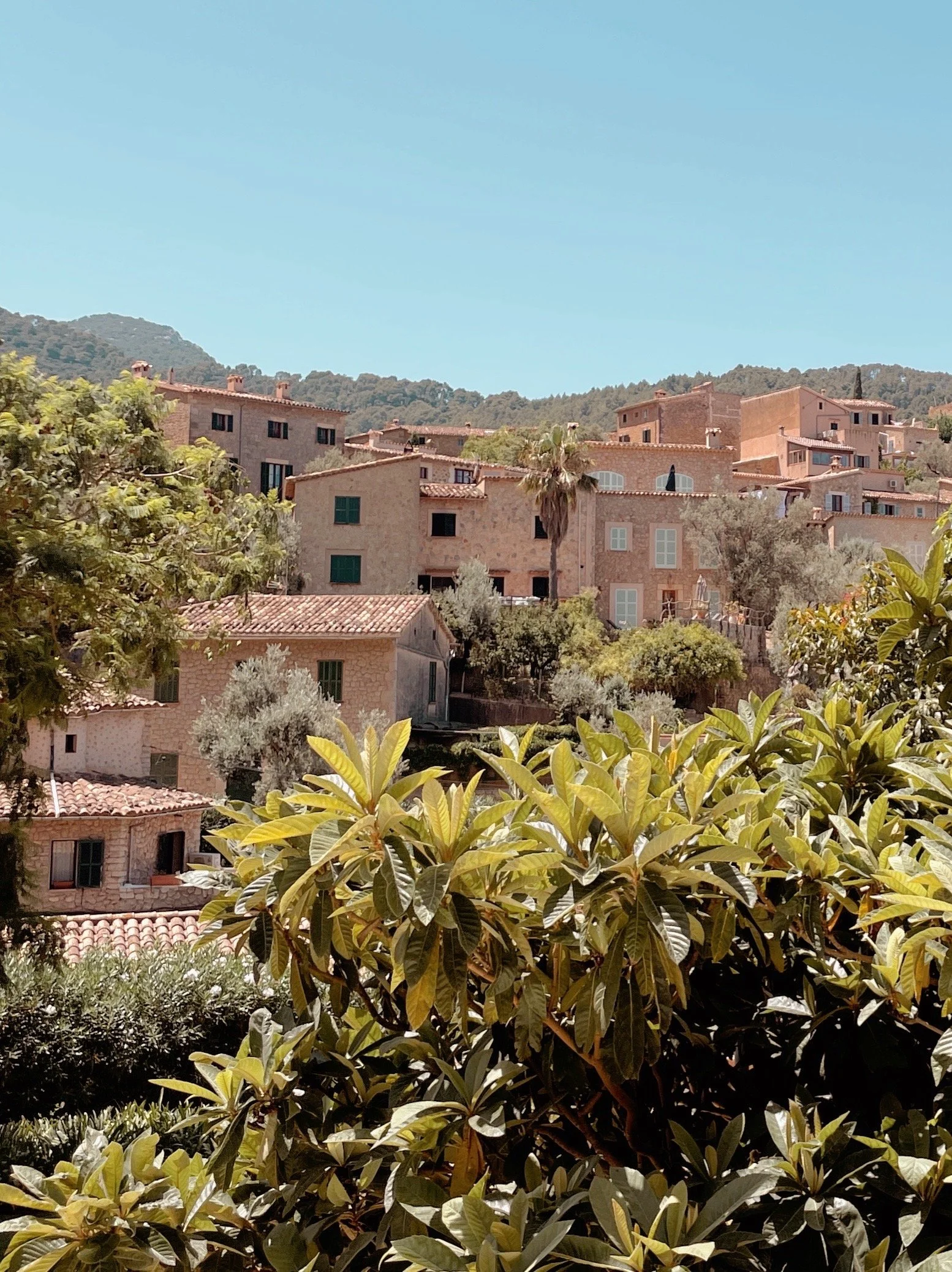
Deia, Mallorca
The ‘Postcard‘
Deià is as pretty as everyone claims.
Honey-coloured houses cascade down hillsides, Bougainvillea spills over walls, the village enveloped by the Tramuntana rising up behind it, with the Mediterranean Sea beyond. It certainly delivers on the ‘postcard’. But the first time I visited, I wasn’t drawn in.
On a summer’s morning, we took to exploring the winding, narrow lanes of the hilltop village with enthusiasm. We followed cool, stone passageways bathed in warm mid-morning light and stairways worn smooth by generations that revealed the village slowly. Narrow streets lined with sandy Marès stone houses rose on either side. Their terracotta-tiled roofs, seemingly colour-coordinated into a single harmonious and calming palette, felt as considered and crafted as everything else in the village.
Reaching the top of the village, we discovered the tranquil Plaza de la Iglesia decorated with fringed guirnaldas de flecos (garlands) fluttering in the breeze, synonymous with summer fiestas across the island. A few steps further, beyond the church, is the mirador (lookout) where we were rewarded with sweeping panoramas across verdant terraces to the sea.
A turn to the left or right revealed the mountains rising on either side, and layer upon layer of dry-stone terraces of olive trees. Beyond them on the right-hand side, a clear view of the honey-coloured houses and the grand La Residencia hotel.
The walk up was worth it on the views alone.
The Quiet.
The village’s streets that day were quiet. Maybe, too quiet? The type of quiet that seemed a bit like absence. Those beguiling lanes, silent, with their houses remaining mostly shuttered.
As we wandered, we passed but a handful of tourists and some influencers garnering content. But, I had come expecting the buzz of village life on a summer’s morning; the smell of cooking through an open window, villagers returning with bread from the panadería, abuelos meeting on a bench. But none of it seemed to be there.
Walking back down, the main road was thick with traffic, day-trippers, cyclists and pedestrians all negotiating around a delivery van wedged into the narrow thoroughfare. Lined with cafes, restaurants, boutiques, galleries, and an adorable village store, the main road is the beating heart of this village.
The cafes were packed, and we waited a long time for a table - an absurd contrast to the village’s maze of empty streets. Coffee and ensaïmada eventually arrived on a terrace looking across the valley, which made the wait seem justified, and afterwards, as the crowds slowly built, we took our leave and continued along the coast road to Sóller.
A morning in the famous postcard village of Deià… and I felt, oddly, nothing.
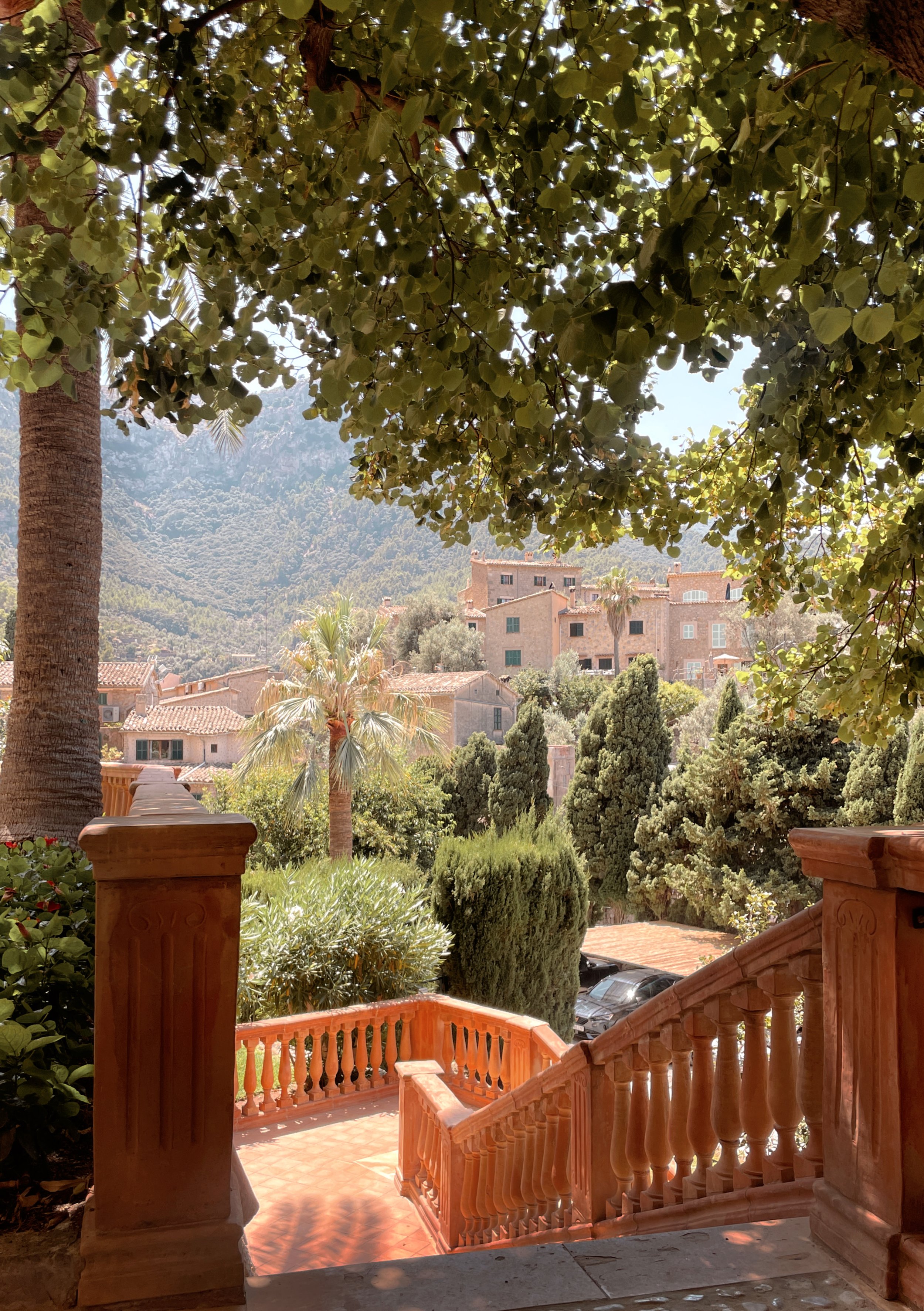
View from the terrace at Restaurante Miró, La Residencia
A Village with Deep Roots.
Deià, like Valldemossa, Sollér, and so many of the villages and towns of Mallorca, has roots that run deep with a long history of settlement. The steep valley has been inhabited since prehistoric times, taking advantage of the area’s natural springs and plentiful resources.
The Romans formally established a settlement here as a fishing village and vantage point to guard against marauders sailing in from the Med. They set the foundation for olive oil production, which was developed further during the Moorish period. The Moors were masters of sophisticated agricultural and irrigation systems, which revolutionised farming here. This is still evident today, seen in the terraces of olive groves at dramatic elevations around Deià, some rising up steep slopes to altitudes of 600m.
Deià’s creative legacy is also well-known. Something about it has drawn artists of significance here for more than a century: the light, the scenery, the particular quality of its quiet. It’s the place where Robert Graves lived and died and famously penned many of his works alongside his partner, the American poet Laura Riding. At one point, Picasso was drawn to the area, too, by the lush landscapes and the unique light.
Since then, Deia has continued to attract creatives, and more recently hosting famous musicians and Hollywood elite, along with resident artists such as renowned ceramicist Maria de Haan and designer Matthew Williamson.
After subsequent visits to the village, I began to understand. This village of 850 residents was never the working village I had come looking for. Deià has been a retreat, an enclave of artists and bohemians, since the early 1900s. Robert Graves came in 1929 and never really left, and more artists, creatives and foreigners followed. The house he built remains and serves as a reminder of the village’s creative provenance, as do the galleries dotted around the village and La Residencia’s collection of originals from the likes of Joan Miró.
On its Own Terms.
Better informed, my second and third visits to Deià were spent on its terms, rather than mine. I stopped looking for what I thought it should be and started seeing what was actually there.
On a clear summer afternoon, we took a table on the terrace at Restaurante Miró, one of the restaurants at the grand La Residencia. This famous hotel from the Belmond Group, is housed in two beautifully restored historical manor houses, surrounded by lush, manicured gardens, and terraces with views across to the village. It exudes quiet luxury, with traditional, quality interiors sympathetic to its Mallorquin heritage.
In the dappled shade of the terrace, our lunch was unhurried and delicious, with a menu celebrating local produce and all the island has to offer. The local sobrasada was superb, as was the vermut. Sitting there, I finally took Deià for what it was.
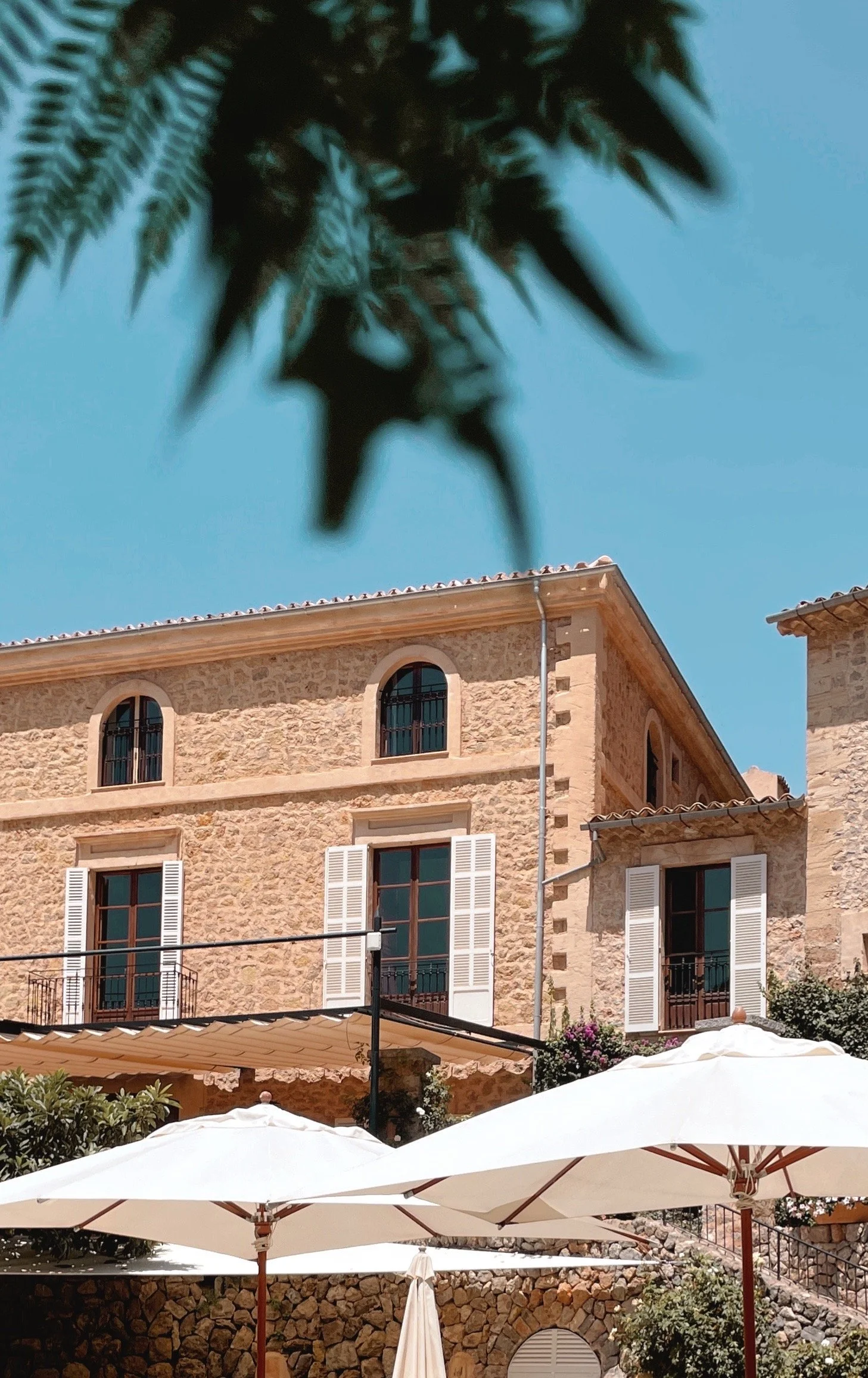
La Residencia, Deià
So, Deià might not give you the ‘abuelos on the bench’ or working village buzz that I was looking for. But come without that expectation, and it gives you something else entirely.
It is one of the most stunning places in the Mediterranean, rich in history, natural beauty and creativity. It’s best appreciated slowly, over lunch with the mountains and village spread out in front of you - preferably with the local sobrasada and a local vermut in hand.
For more on the village, read the full Guide to Deià.
If you are exploring the area, also check out the Guide to Cala Deià and Valldemossa.