Cala Deià: Is Mallorca’s Famous Cove Worth it?
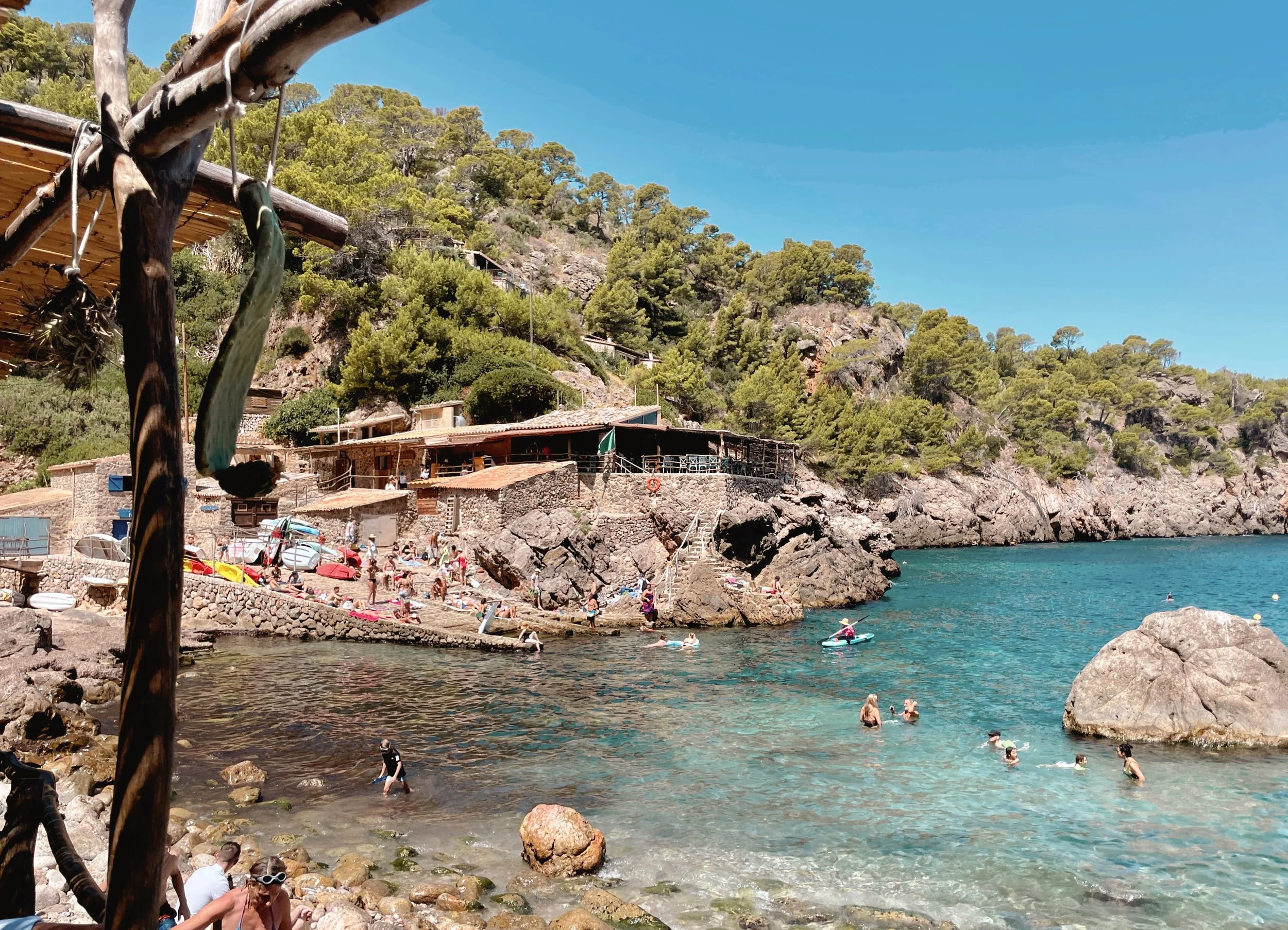
Cala Deia, Mallorca
The Essentials...
- Cala Deià is a small rocky cove beneath Deià village, famous for its crystal-clear water, its rock-side restaurants, and as filming location in The Night Manager
- For how to get there, where to park and where to eat, see the full guide to Cala Deià
Cala Deià asks something of you. There is a certain amount of planning and effort required to visit; getting there is not a simple affair. You either walk through the olive groves and pine forests down a mountainside for half an hour (and back up later), hire a boat or take your chances with the car park.
Getting a table for lunch also requires some effort - and luck. And yet people come back to this cove year after year, because what waits at the bottom is quintessentially Mediterranean: a narrow ribbon of rocky shore, crystalline water, cliffs rising on either side, and a plate of fresh fish eaten almost on the waterline. This is the cove that sits below Deià village in Mallorca, and getting it right is a matter of timing and a little planning.
The table I could never get…
I had seen the photos, seen the reels, seen The Night Manager, and had wanted to eat fresh fish overlooking the water at Ca's Patró March ever since. This perfectly placed restaurant was a locals’ gem until the BBC’s The Night Manager used it as a filming location. It’s now one of the most popular ‘off the beaten path’ tourist spots on Mallorca.
Reservations at the restaurant fill up incredibly quickly and every summer, try as I might, getting one proved impossible. But last year, Lady Luck was on our side and we managed to secure a table… front line above the sea, no less.
So one overcast July morning, we drove up to Deià first thing, trying our best to ignore the cloud cover in the hope that we would get a space in the small car park not far from the cove. The drive to Deià is always one to savour; as you make your way up through the Serra de Tramuntana the landscape changes rapidly - from urban and suburban, agricultural plains, then pine forest and dry-stone olive terraces as you climb. The route also goes through the striking village of Valldemossa, and then runs along the coast for about 10km.
Arriving just before 10 am, we were relieved to see the barrier to the cove road was still open (it closes when the car park fills), so we gingerly wound down the single-lane road to the car park. We were greeted with a selection of spaces, but these filled up fast, even in the time that it took to feed the pay machine. From there it was a short walk down to the beach following the path along a narrow valley, a trickle of a stream winding along beside us, and the sea opening up ahead in a wedge of emerald green beyond.
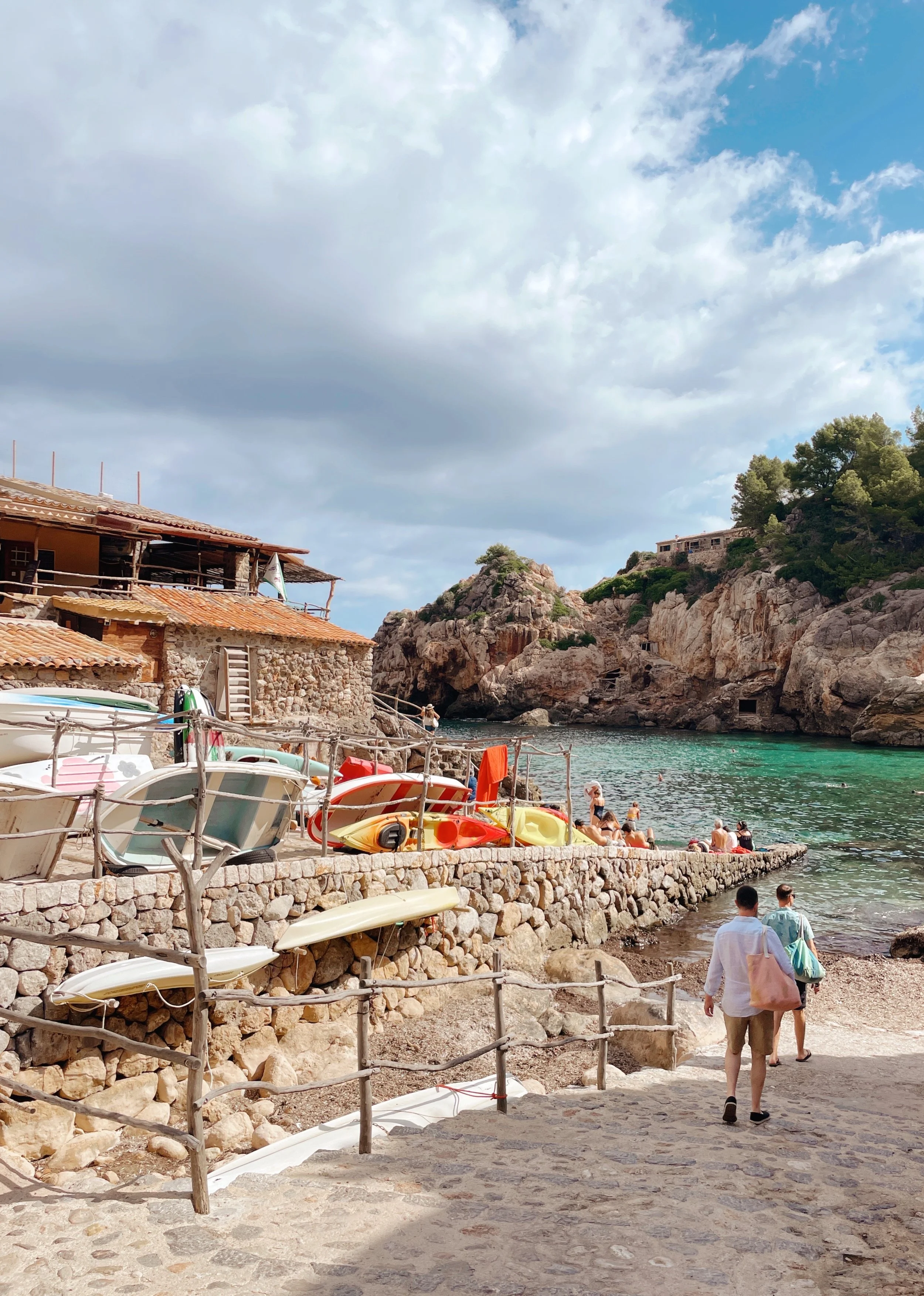
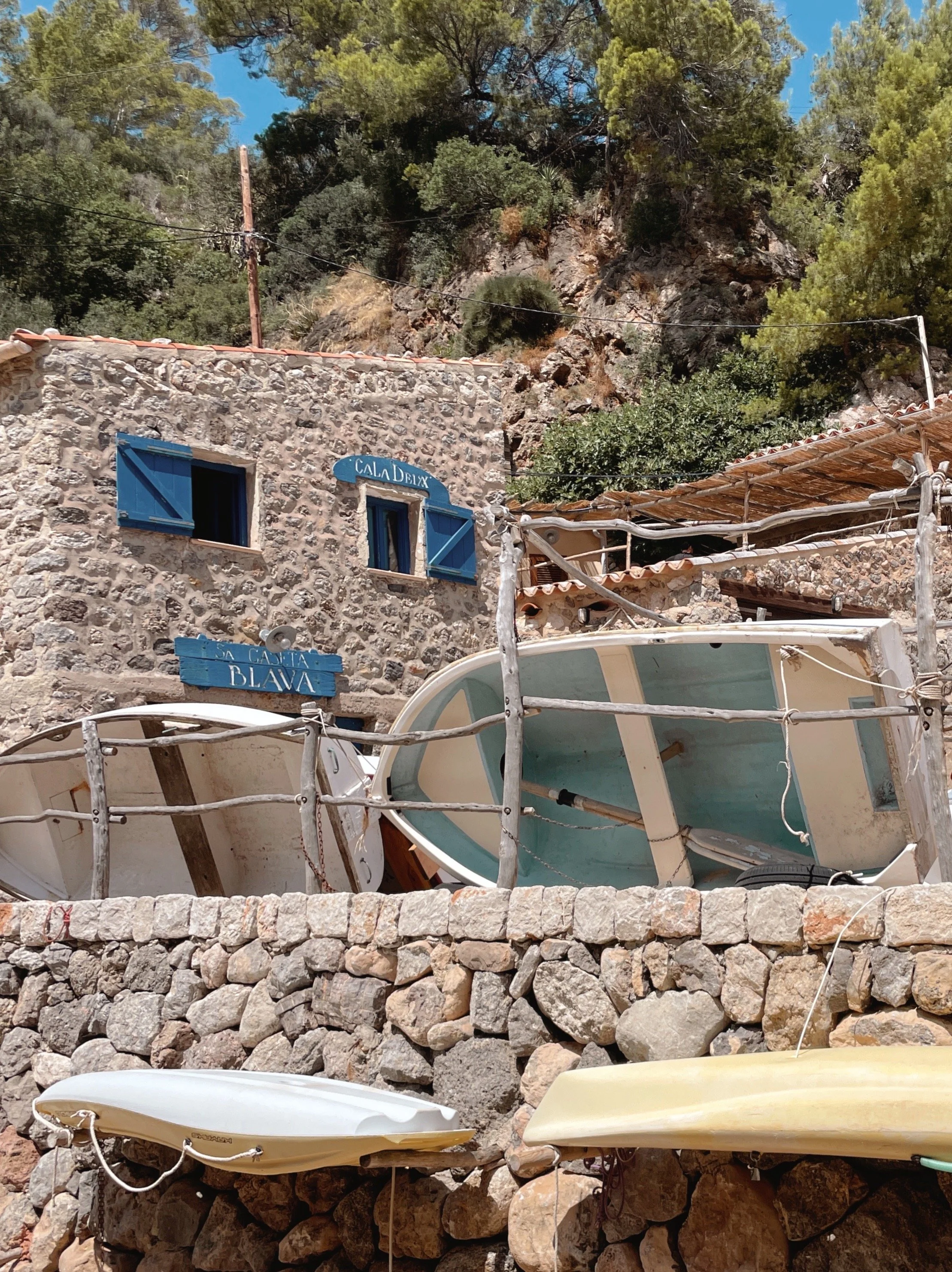
And there it was… a worn cobbled ramp edged with rough branch railings, little faded boats stacked alongside - dinghies in faded mint and white, and kayaks in hot orange and yellow mixed in with them. The same honey-hued stone of the village above makes up the few buildings down here, once boat sheds and fishermen's huts from humbler days, and now catching the first real heat of the day as the cloud burned away.
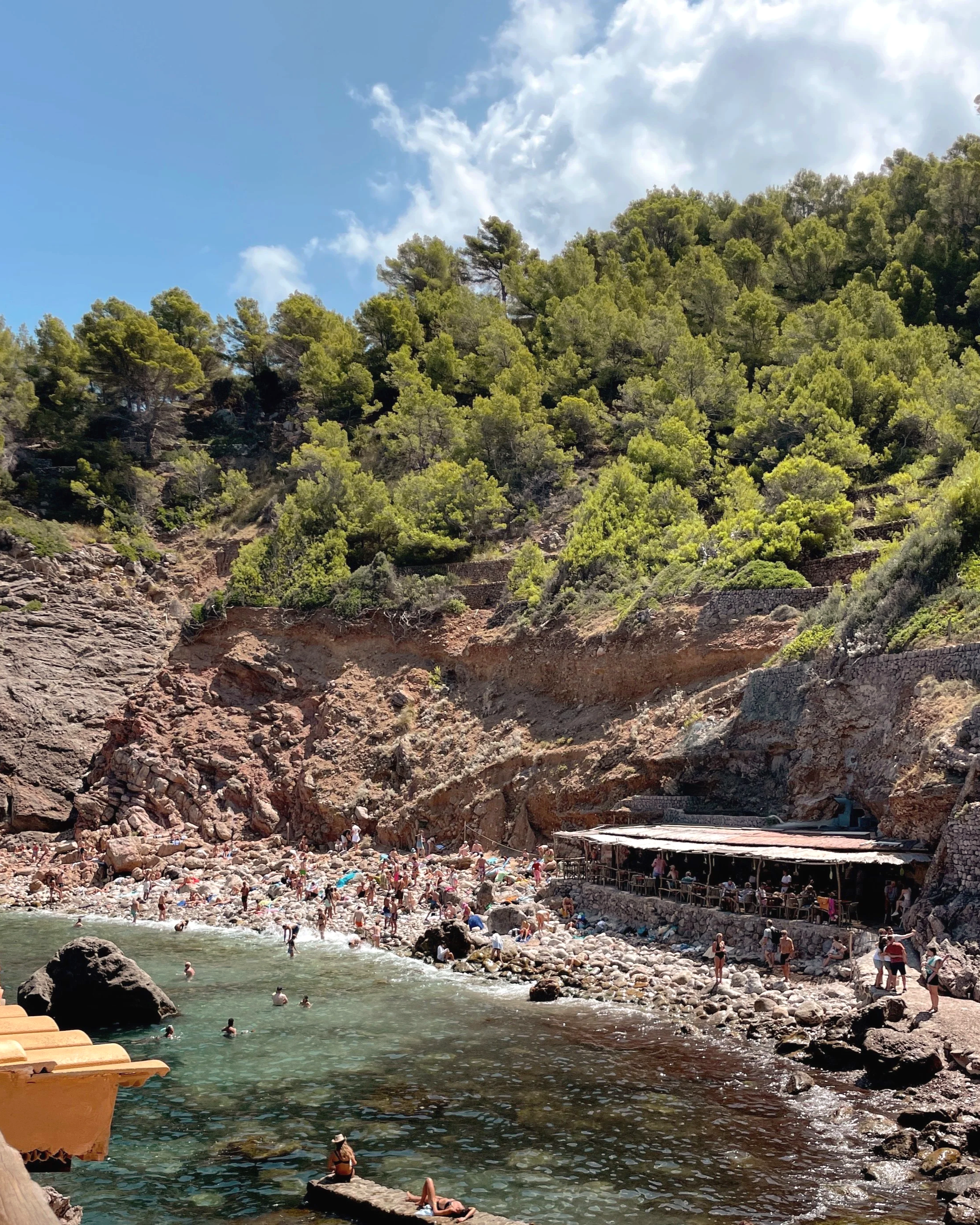
The narrow rocky beach already had a small crowd, even at 10 am, but finding a spot wasn’t difficult. This isn’t the kind of cove to lie on the beach all day; the rocks make sure of that. Instead, we pulled the snorkels out and got to it; the water is crystal clear, and the rocky shoreline guarantees that there is plenty to explore below the surface. Fish, sea urchins, outcrops of seaweed, but also medusas (jellyfish) - so be aware. The flag bearing an icon of jellyfish near the restaurant now made sense as one peacefully bobbed past, a little too close for comfort.
Lunch on the rocks
The old stone buildings now house the two restaurants that share this cove: Ca'n Lluc and Ca's Patró March. We had an hour before our table at the latter, so we made our way to Ca'n Lluc first, for a drink with a view. Ca'n Lluc sits lower, closer to the water than its famous neighbour, its tables almost at sea level where you can watch the swimmers slip in and out of the jade-tinted water. While we didn’t eat here, I would have been more than happy to stay all afternoon on location alone.
After, we took our table at the coveted Ca’s Patró March. At this point, I’m literally dressed in flip-flops, a bikini, and wrapped in a towel, but this place is so chill that no one takes issue with it, and I see a healthy mix of smart-casual and similar beach attire among the patrons.
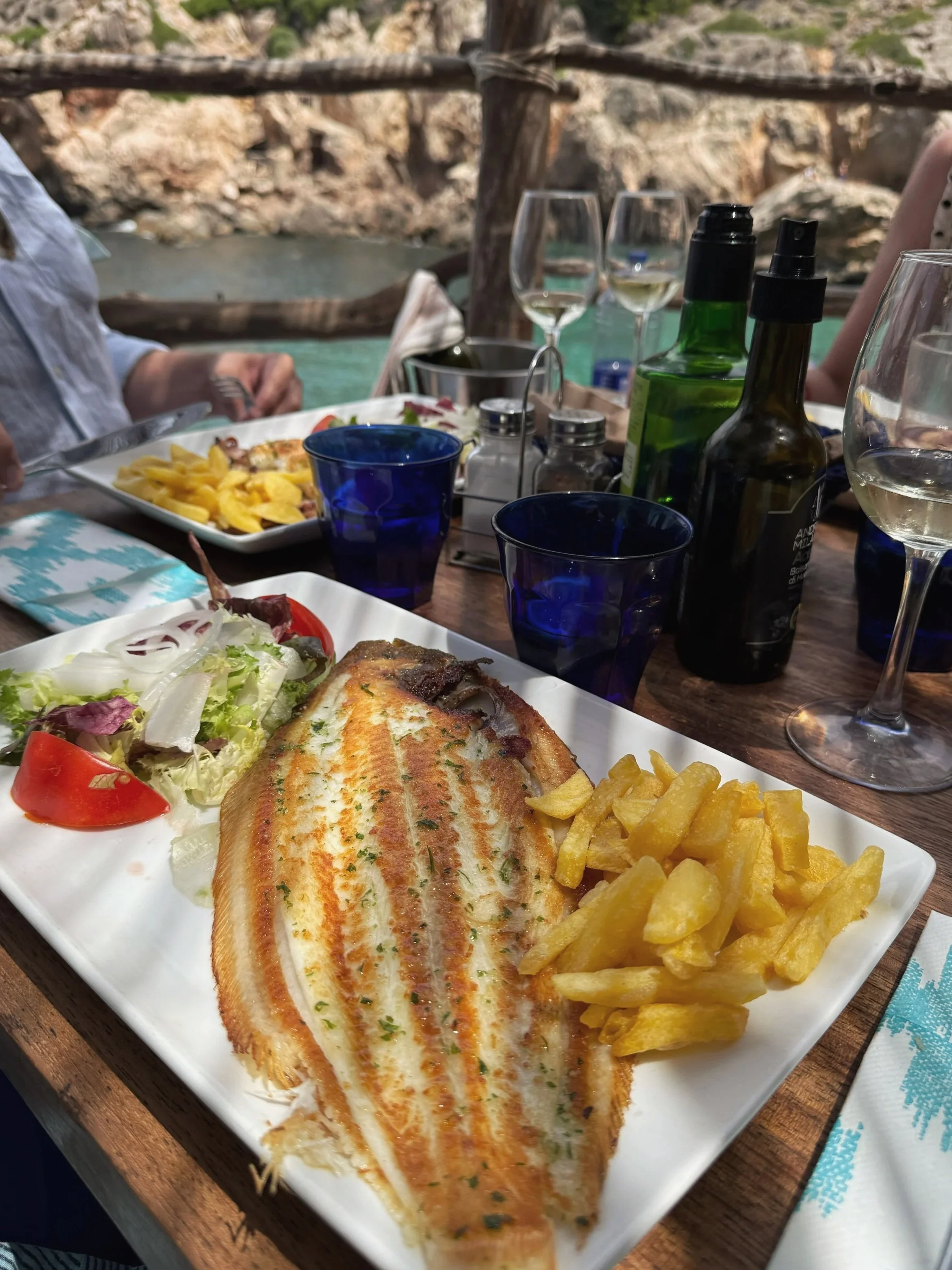
Our table is perfectly situated above the cove, overlooking water in every shade of green. It is exactly as I'd imagined, and a bottle of local white makes it better still. The food that follows is simple and fresh – calamares fritos with alioli, grilled fresh rodaballo (turbot) and hand-cut chips.
The fish here is freshly caught, and you can check the blackboard for what’s available on the day. What we ordered was perfectly cooked; simply grilled, eaten with a squeeze of lemon, and paired with a bottle of light Mallorquin white wine. The service was friendly and attentive, even though the restaurant was fully booked. But, while good, Ca’s Patró March is much more than the food. It’s one of those places where the whole is greater than the sum of its parts - a unique combination of elements that together create something far more special than simply the food, drink or service alone. Put the location into the mix, and suddenly this place becomes unforgettable.
was it worth it?
We lingered at that table as long as we could - a good two and a half hours at least, soaking up the idyllic views and plentiful wine. With kids to collect, we couldn't stay, but I would happily have given the whole afternoon to that table.
Driving back up to the main road, we passed people walking the steep hill back to the village, some trying to flag down a lift (our car was full), others looking thoroughly fed up in the searing afternoon heat. A little reminder, if one were needed, that getting to Cala Deià is part of the bargain, and that a little planning, an early parking space or a seat on a boat, goes a long, long way.
And would I go back? Absolutely. Not for the hype, not for the anxiety of missing a space in the car park, and not for the unforgiving little beach, but for the simple pleasure of swimming the crystalline waters and then eating well on the rocks at the water's edge with friends - which is about as close to barefoot, Mediterranean luxury as it can get.
For the full guide to Cala Deià, click here.
For more on the village above, read the guide to Deià, or all about Deià itself. If you are exploring the area, also check out the Valldemossa guide.