A Guide to Deià: What to See, Eat and Do in Mallorca's Prettiest Village
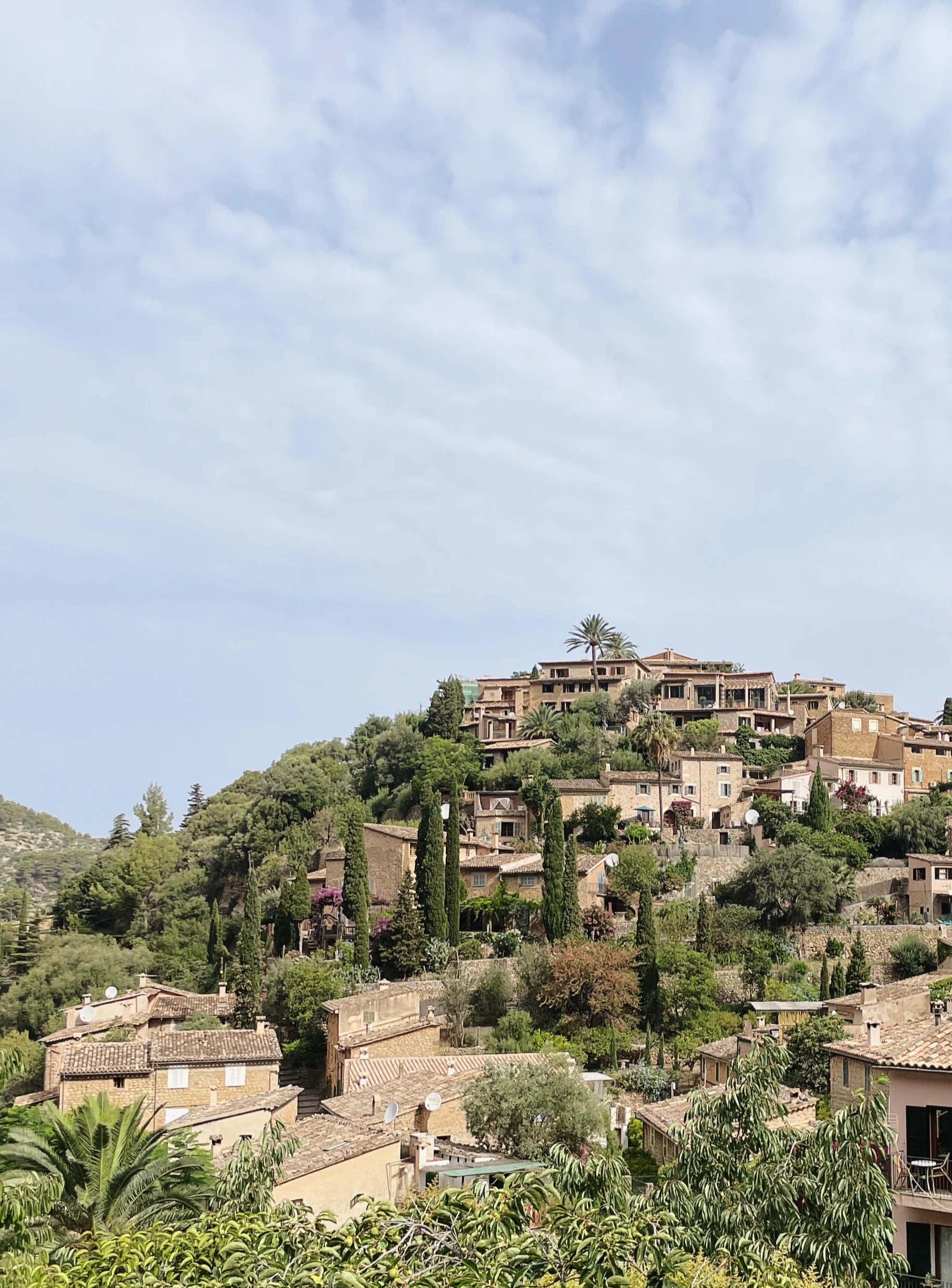
Deià, Mallorca
The Essentials...
- Visit early or in the evening to avoid the crowds, and out of peak season if you can
- Get here by car or on the TIB 203 bus, but beware that parking is very limited
- Swim at Cala Deià, the village's pebbly cove, covered in its own separate guide
- See where Robert Graves lived and worked, and browse the galleries and studios that make this an artists' village
- Eat well, from a vegetarian brunch or lunch at De Moniö to dinner at El Olivo in La Residencia
- Discover more about this stunning mountain village by reading more about Deià
No trip into the Serra de Tramuntana is complete without Deià. Honey-coloured houses tumble down the hillside, the mountains rise behind, and the Mediterranean sits below. It is also a great place to eat and shop along this stretch of coast, with a creative streak that runs much deeper than the postcard suggests.
In This Guide:
When to Visit
Deià is small, and in high summer it can feel it. The main road can fill with traffic, cyclists and day-trippers, the cafes have a wait, and the cove gets busy by mid-morning. The village's upper lanes stay relatively quiet in comparison, with the main road being the beating heart of the village.
So, as with the rest of Mallorca, I would always recommend shoulder season. The weather in May, early June, and late September and October still give you warm days, but fewer people. Out of season, the village is at its most atmospheric, though note that some restaurants in the village and cove close over winter, and it can get very cold. If you can only come in peak season, arrive first thing or in the early evening for a much gentler experience.
Deià Weather, Month by Month
Deià has a Mediterranean climate: hot, dry summers, but winters can get cold in the mountains.
Getting There
Deià sits on the Ma-10 coast road, roughly 45 minutes from Palma and about 15-20 minutes beyond Valldemossa. It is a pretty drive, climbing through pine forests, olive terraces, and with the sea opening up once you hit the coast road. Many people pair it with Valldemossa and Sóller in a single day.
Without a car, the TIB 203 bus runs from Palma's Estació Intermodal and stops in Deià on its way to Sóller. It takes around 60 minutes from Palma. Services are roughly hourly in summer and less frequent in winter, so check tib.org before you set off. In peak season, the buses fill up and you may not get on, but the route is scenic and drops you right in the village. You can pay the driver by contactless card or cash.
Parking
Parking in Deià is difficult, and worth planning for. There are some small paid car parks in the village and on the main road as you arrive from the Valldemossa side, and a few spaces along the road itself, but they fill early. Aim to arrive before 9.30am in summer.
For the cove, there is a small car park above Cala Deià that fills by mid-morning, but you can also park in the village and walk down (although you will have to walk back up!)
I cover the cove and its parking in more detail in my guide to Cala Deià.
A restaurant booking at La Residencia gives you access to the hotel car park, which is no small thing in Deià. We used it for a long lunch and explored the village on foot afterwards. Worth confirming the policy when you book, as it can vary.
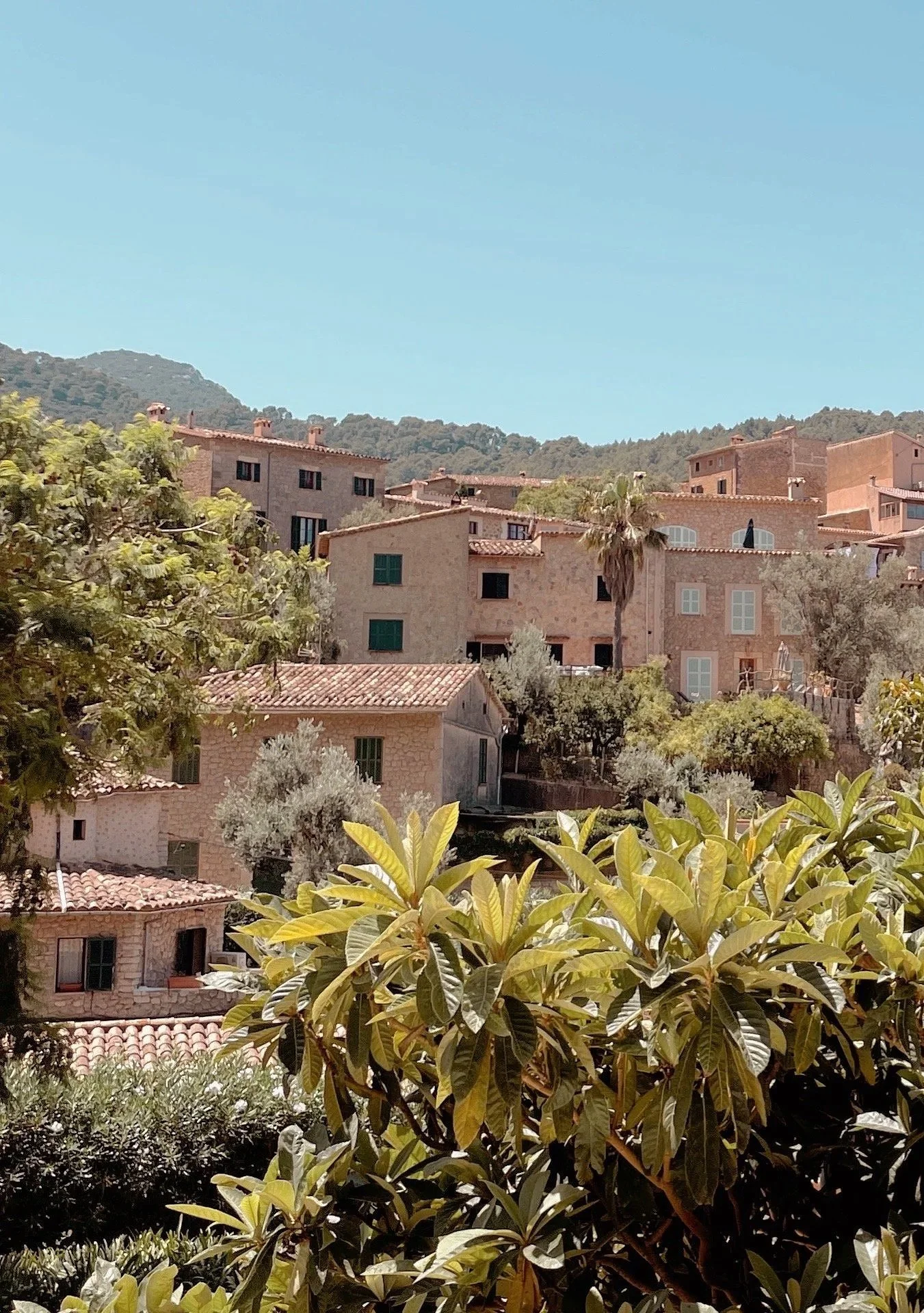
Deià, Mallorca
What to See & DO
The Village
Deià is a place to wander. Honey-coloured stone houses with traditional shutters are draped in bougainvillaea and line narrow lanes. It is small and perfectly navigable on foot, but it is a hilltop village, so keep this in mind if mobility is an issue.
Climb the lanes to the church of Sant Joan Baptista at the top, where the small cemetery holds the grave of the poet Robert Graves, marked simply with his name. Just beyond the church is the mirador, where the terraced olive groves drop away to the sea, and the mountains and village spread out behind you. It is a short climb and well worth it.
Shops, cafes, galleries and restaurants line the main road that runs through the village, and this is where you’ll find most of the buzz. See more about where to eat and shop below.
Cala Deià
The rocky cove below the village is one of the loveliest on the island: crystal clear water for swimming and snorkelling, and two rustic restaurants built into the rocks. Because it deserves more than a paragraph here, read my full guide to Cala Deià for how to get down, where to park, and the two places to eat - and find out whether it lives up to the hype here.
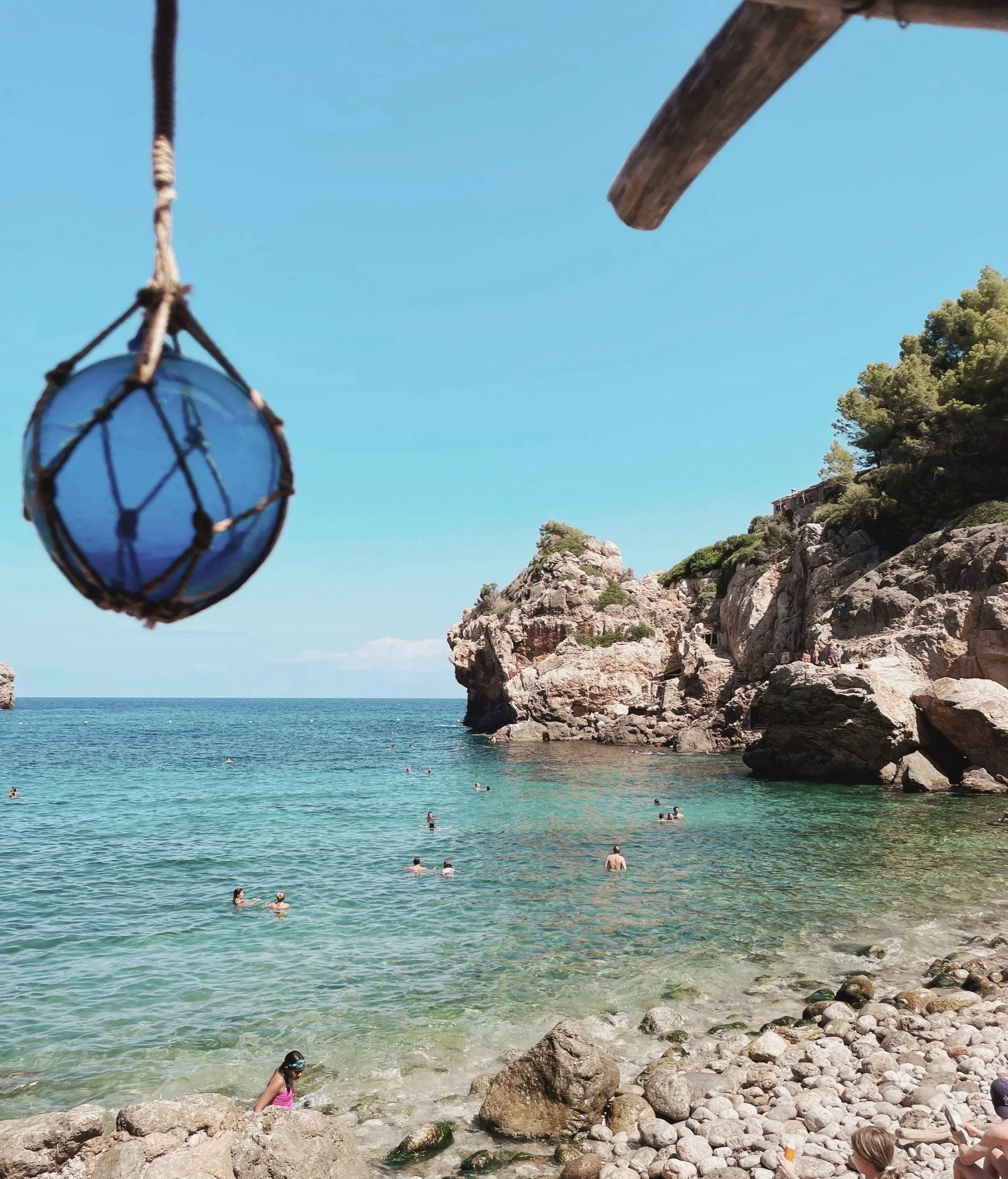
Cala Deià
La Casa de Robert Graves
The English poet and writer Robert Graves came to Deià in 1929 and, but for the war years, never really left. The house he built, Ca N'Alluny, sits on the edge of the village on the road towards Sóller and is now a small museum. It is kept much as it was, with his study, his books and his printing press.
Hours: SUMMER: (1 April-31 Oct) M-F 09:30 to 16:30 (last admission 15:50)*
*Hours change according to the season, so check the website before going.
Tickets: Adults €10,
Retirees/Students €7,
Children under 12yrs €5
Time: 45min-1hr
De Haan Gallery / Studio (Maria De Haan Ceramics)
Deià's creative life is alive and well, and a wonderful place to see it is the De Haan Gallery/Studio, which belongs to the British-Spanish ceramicist Maria De Haan. Maria is known for her unique smoke-fired vessels, and the gallery shows her own work alongside a cast of other contemporary ceramic artists.
Maria also runs ceramics workshops from her studio, with 2-hour taster sessions in addition to three and five-day courses for everyone from complete beginners to experienced makers. Booking ahead is essential, and details are on her website.
Hours: M-S, 10.00-20.00
dehaangallerystudio.com
Son Marroig
Five minutes drive back towards Valldemossa on the coast road, Son Marroig is the former estate of Archduke Ludwig Salvador, the Austrian nobleman who did so much to document and protect this region of Mallorca.
The house is now a small museum, but the real draw is the view and the Carrara marble temple in the garden, looking out over the Sa Foradada peninsula with its famous pierced rock. From the estate, a footpath leads down to the peninsula and its paella restaurant (see Foradada Restaurant, below). I also cover Son Marroig in the Valldemossa guide, since it sits between the two villages.
Hours: Open M-S, 9.30am to 2pm & 3pm to 5.30pm
Tickets: Adults €4, children up to 12yrs are free
Time: 45min-1hr
Where to Eat and Drink
For such a small village, Deià has a remarkable number of good places to eat, from rustic cove restaurants to one of the island's grand hotels.
Guide: € budget friendly | €€ mid-range | €€€ splurge
€-€€
De Moniö
A tiny, beautiful vegetarian cafe and shop tucked just off the main street, and a real favourite of mine. The menu is small and changes often, with a daily special, good cakes and pastries, proper coffee, and a list of local wines. Half the space is a little shop selling ceramics, jewellery, and glassware, so you can browse while you wait. Seating is limited, inside and out, but it is well worth the squeeze.
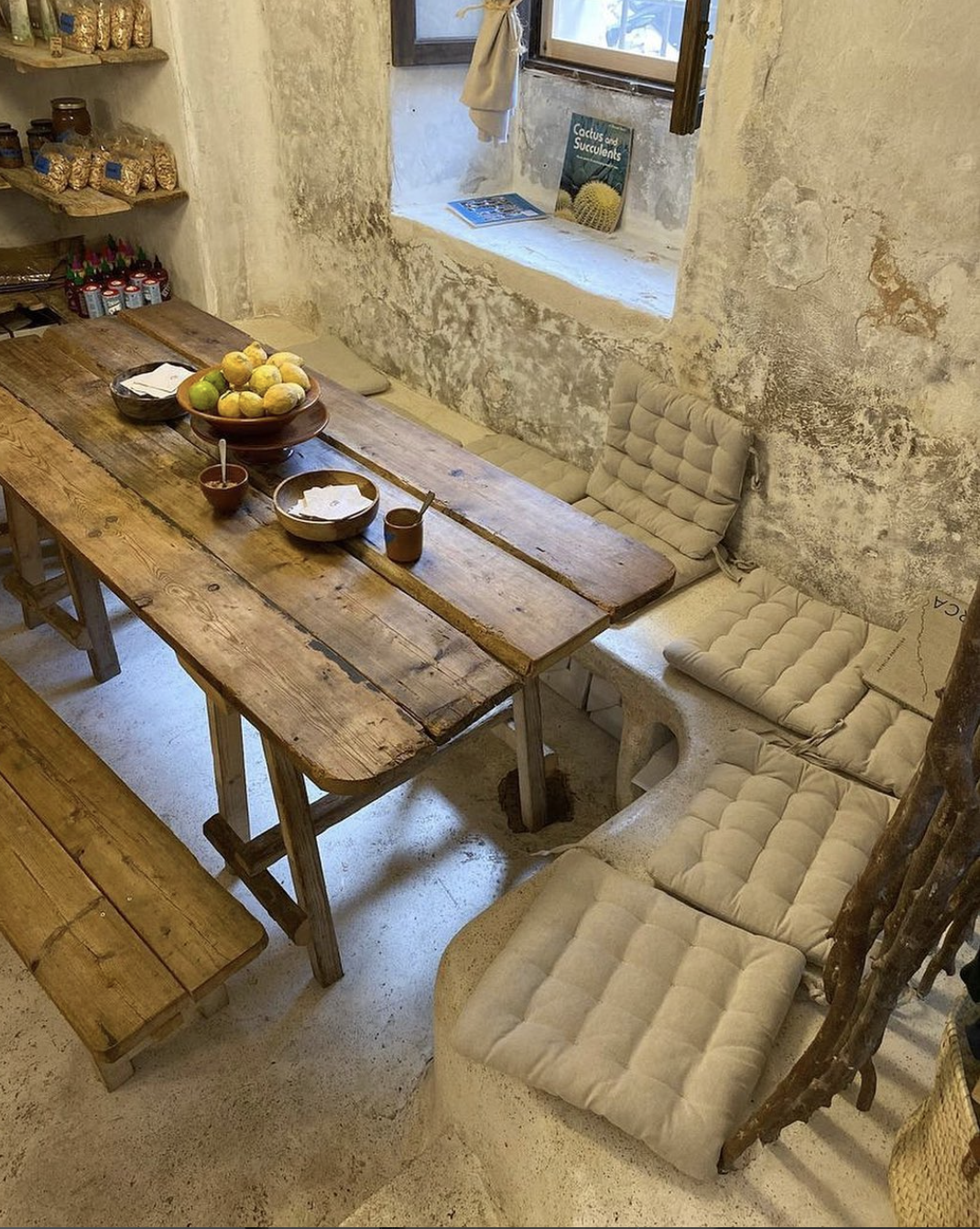
De Moniö, courtesy of @de_monio2020
€-€€
Forn Panadería Deia
The village shop, on the main road, is the kind of place that keeps Deià feeling like a real village. Part bakery, part grocery, it is where to pick up fresh bread and pastries, a bottle of Mallorcan wine, fruit, and the bits and pieces you need if you are self-catering.
Prices are higher than a large supermarket, as you would expect somewhere this small and this remote, but it saves the drive to Sóller and the local treats are good.
€
Aura
A newer and quieter addition to the village's dining scene and one I have not yet eaten at, so I will not offer a personal verdict, but it has 5/5 stars on Google and the food looks delish. It is worth checking opening hours before you go, as smaller places can change with the season.
€-€€
Barraco
Barraco is a new bar that has popped up in Deià for 2026, and has started the season off with some epic parties already, with host DJs including Groove Armada. It’s one to look out for and definitely on my list!
€€-€€€
Foradada Restaurant
The old paella spot beneath Son Marroig has reinvented itself. What was simply Sa Foradada is now Foradada Restaurant, a family-run operation spread across three spaces that share the same stretch of coast opposite the pierced rock it takes its name from.
Foradada Mar is the original, right down where the rocks meets the sea, the most intimate of the three, reached by boat into its little cove or on foot down from the Son Marroig estate (around 40 minutes, with a climb back up afterwards).
Foradada Mirador sits higher up near the road, with wide open views and a kitchen doing elevated Mediterranean cooking. It is the easier choice if you want the setting and the sunset without the walk. There is also a bar, Foradada Bar, for a drink in between. The place made its name on paella cooked over a wood fire, and the food is still respects tradition. The spaces keep different hours and all close on Tuesdays, so check ahead and book, particularly for the Mirador at sunset. Take good shoes if you are walking down to Foradada Mar.
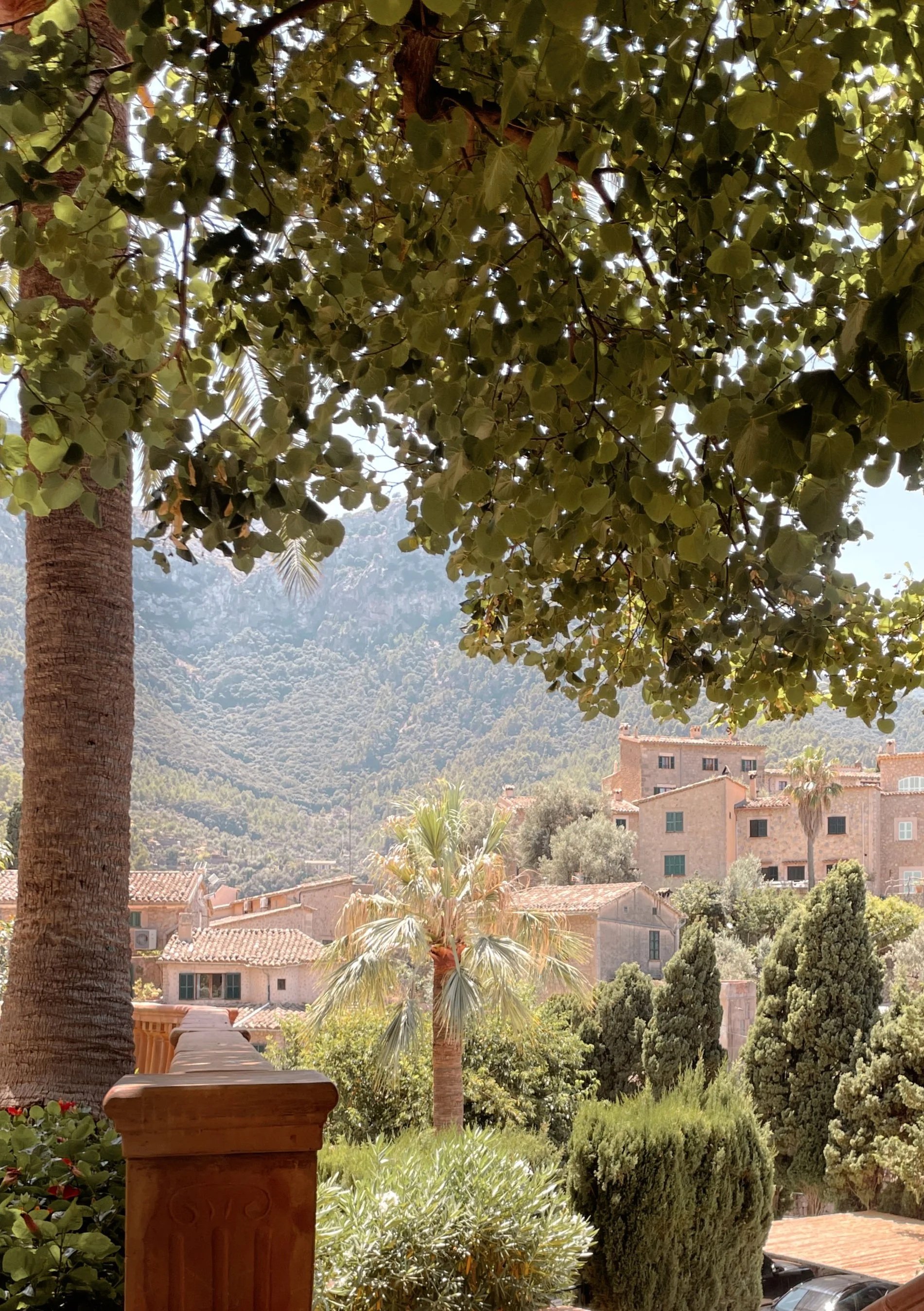
The tree-shaded terrace at Restaurante Miró, La Residencia, Deià
€€€
La Residencia
(El Olivo, Restaurante Miró and Tramuntana Grill)
La Residencia, the village's landmark hotel (more on it below), has three restaurants, all open to non-residents, though to different degrees.
El Olivo is the most talked about, set in a beautifully converted olive mill, serving refined Mediterranean cooking that uses local produce. It is kept mainly for hotel guests, so non-residents can only book it space-permitting about a week ahead, so don’t just turn up, even in shoulder season.
Tramuntana Grill is the poolside option, casual with a menu built around a charcoal oven, doing light bites and salads by day and grilled fish and meat in the evening. It is open to non-residents for both lunch and dinner, but the food gets mixed reviews.
Restaurante Miró is the one I would point you to, with its relaxed terrace looking across to the village, surrounded by the hotel's manicured gardens. It is a lovely spot for an unhurried meal with a vermut and a view. We enjoyed a superb lunch here in the dappled shade of the terrace, enjoying a menu of local produce with polished service.
It was my husband’s birthday, so we were welcomed with a glass of bubbles on the house, and everything that came after was delicious. We enjoyed a selection of tapas, small plates and cocktails, and it turned out to be one of the best long lunches we’ve had on the island.
Worth knowing: La Residencia has a gated car park for hotel guests and for those with a restaurant booking*. If you are planning a long lunch or dinner, as we did, make use of it and explore the village on foot before or after.
*Worth confirming when you book, as the policy can change.
Book ahead for any of the three restaurants.
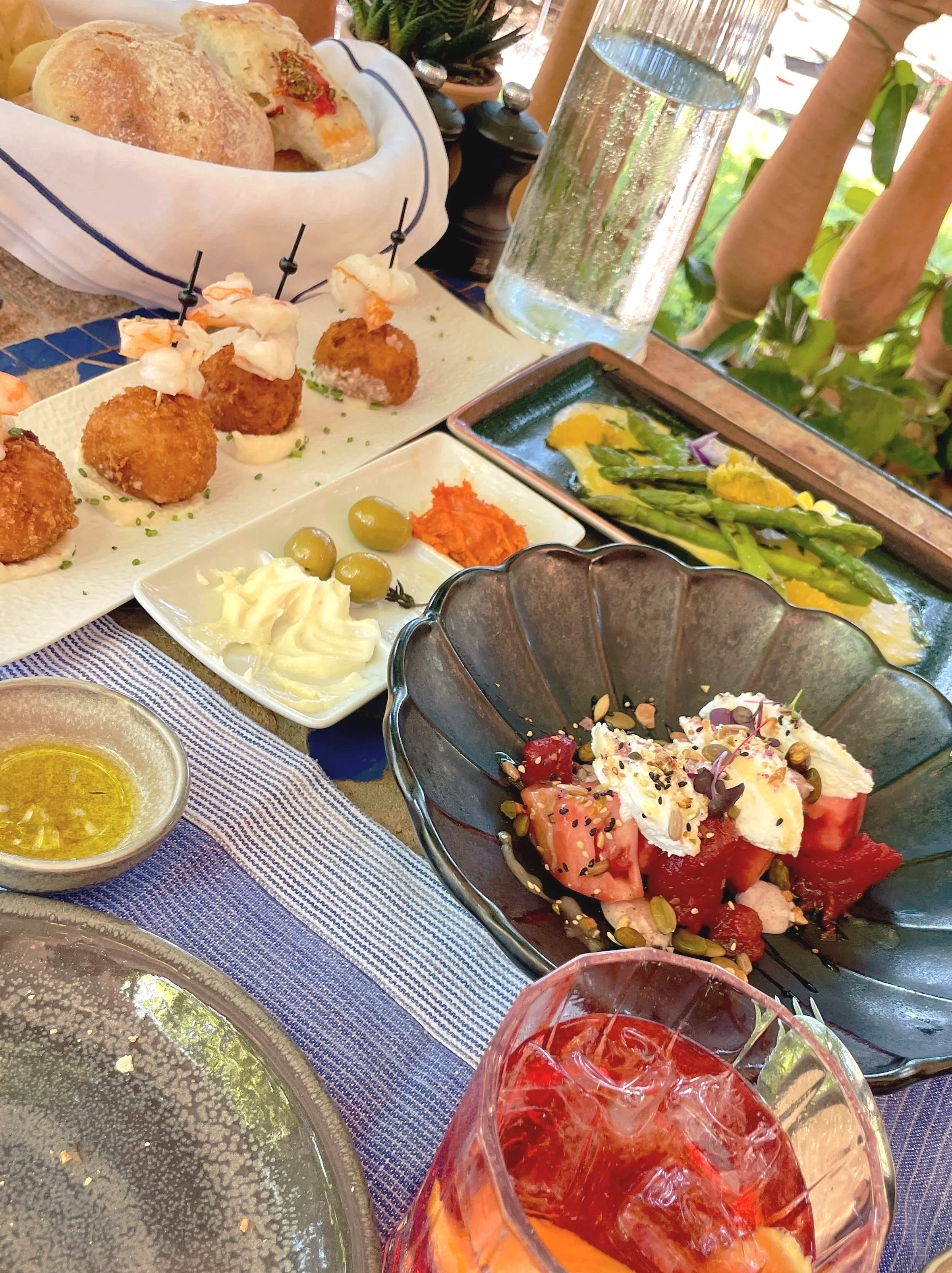
Restaurantè Miro
€€€
Hotel Corazón
This one sits between Sóller and Deià, on the coast road between the two. Hotel Corazón is an artist-run hotel, farm and restaurant, and the kitchen does relaxed, seasonal cooking built around produce from its own farm, all served on a terrace looking out at the mountains. It is as much about the setting and the easy, creative atmosphere as the food. Worth booking ahead.
Cala Deià: Ca'n Lluc and Ca's Patró March
The two restaurants down at the cove, one built onto the rocks at sea level, the other perched just above the sea, are a large part of why people make the trip down.
Both do simple, fresh seafood, both are seasonal, and are best booked ahead. I cover them properly, along with how to reach the cove, in my guide to Cala Deià.
Where to Stay
Deià has an unusually strong cluster of hotels for its size, from Belmond La Residencia's luxury to the simple, family-run Hotel d'es Puig. I've broken all five down properly, with links and car-vs-no-car advice, in my full guide to where to stay in Deià.
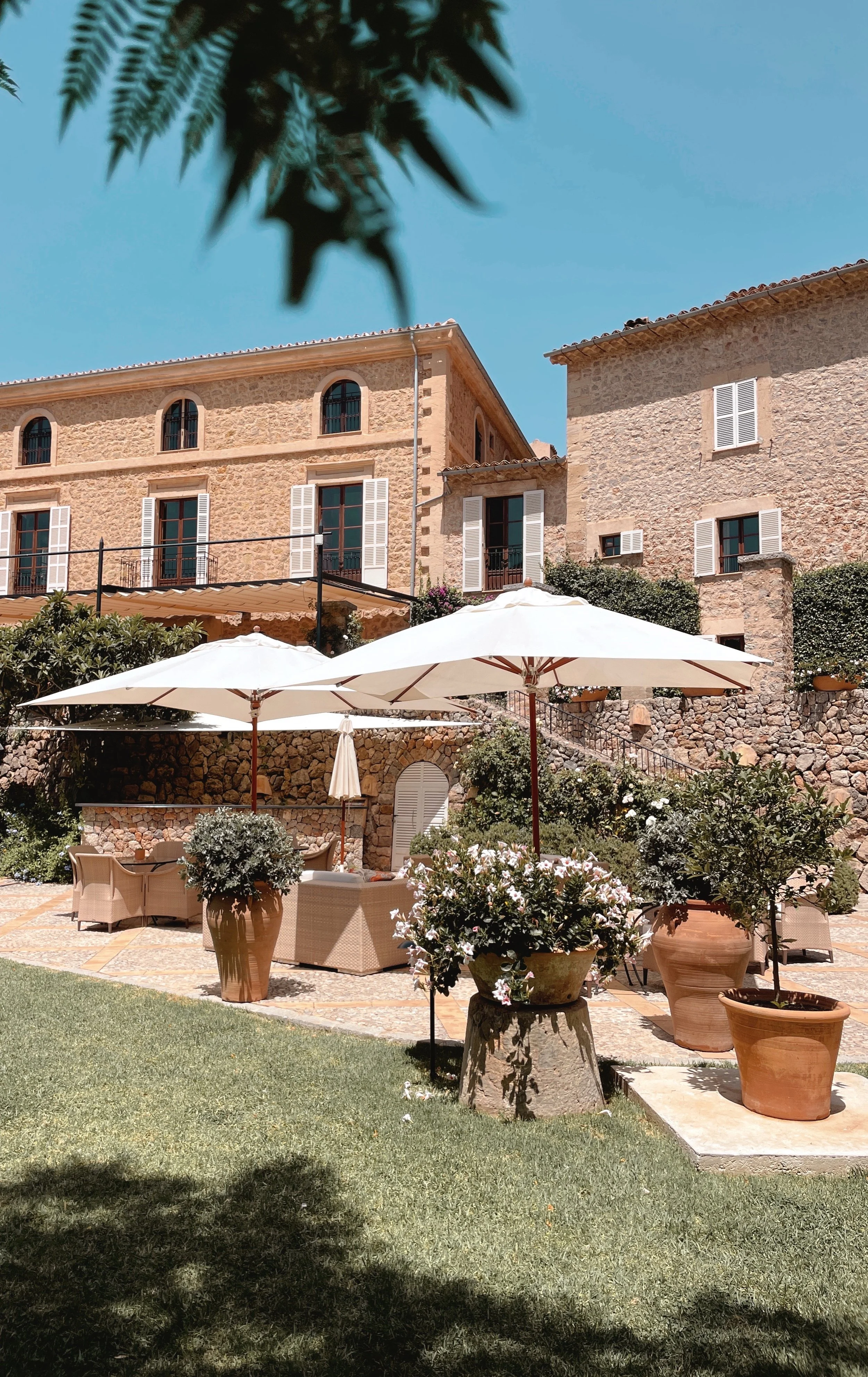
La Residencia, Deià
Shopping
Deià's shops are small, individual and a cut above the usual, reflecting the village's creative reputation. They are mostly strung along the main road, which is the heart of the village.
Caserra 71
The newest arrival, and a real reason to visit if you love interiors. Caserra 71 is the Deià lifestyle store from British designer Matthew Williamson, who lives in the village, and opened in spring 2026. As you would expect from Williamson, it is the opposite of minimalist: rich colour, bold pattern, and an eclectic mix of clothing, homeware, textiles and vintage pieces, set in a traditional townhouse.
De Moniö
Small but perfectly formed in my opinion, and worth a second mention for its shop as much as its cafe (see Where to Eat). The little retail corner has a genuinely good eye, with rustic ceramics, blown glass, jewellery, and wines. A good spot for a present that feels properly of the island.
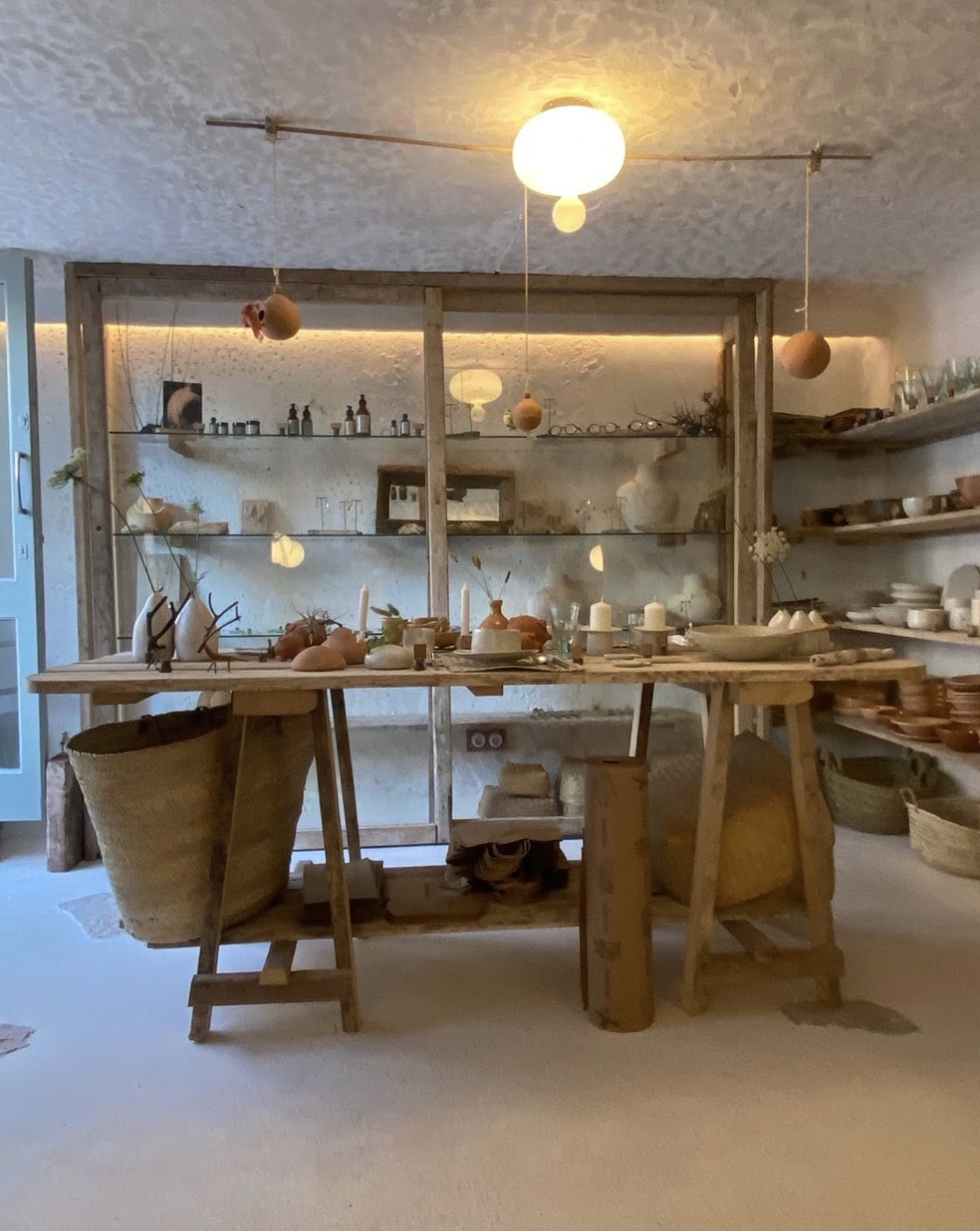
De Moniö, courtesy of @de_monio2020
Obsolete
A long-standing favourite, this family-run design store has shops in Deià, Valldemossa, Palma and Ibiza. Think bespoke furniture made from recycled wood, curated vintage and antique finds, beautiful textiles, kaftans, jewellery and objects gathered from Mallorca and further afield.
The Deià shop has more of a fashion and lifestyle lean. Look out for their newer collective concept and pop-up spaces - an extension of the same curated, maker-led spirit, and check ahead as opening can be seasonal. I believe a wellness space is on the cards, as well.
Joy Made by Hand
A lovely shop devoted to the handmade, with a second branch in Esporles. The treasures here are chosen to celebrate craft and traditional techniques: clothing, accessories, scents, textiles and small objects from Mallorca, Spain and around the world, from Colombian straw hats to Peruvian alpaca blankets and dresses by Cecilia Sörensen.
For more on the village, read all about Deià here.
If you are exploring the area, also check out the guide to Cala Deià and the Valldemossa guide.