A Guide to Valldemossa: What to See, Eat and Do in Mallorca's Most Famous Village
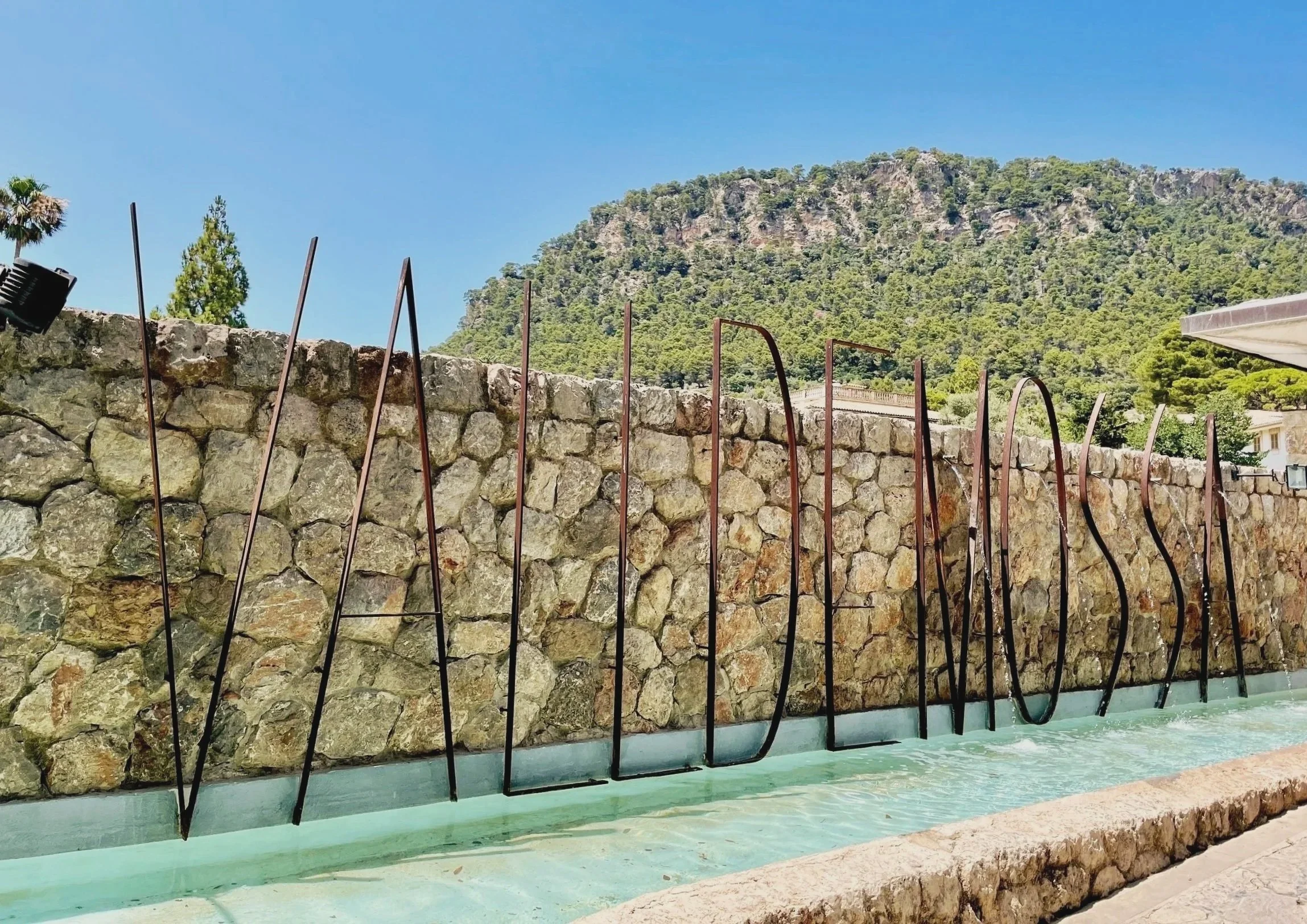
The Essentials...
- Visit early or during the evening to avoid the crowds
- Get here by taxi, car or by bus, but beware that parking and buses fill up fast
- Visit La Cartoixa de Valldemossa and discover where Fedreric Chopin's completed his sonatas
- Explore the flower-lined ancient streets to discover the village's layers of history
- Eat Coca de Patata at Ca'n Molinas or discover the incredible views with lunch on the terraces at De Tokio a Lima
- Discover more about this stunning mountain village by reading the editorial piece on Valldemossa
No trip to Mallorca would be complete without a journey into the spectacular Serra de Tramuntana to experience its majesty and visit its villages nestled into the mountains. Valldemossa is one of the most famous of those villages and delivers on history, charm and scenery. Here are my recommendations on what to see, eat and do:
In This Guide:
When to Visit
Summer brings the crowds and the heat. Tour buses line the main road, and the cafes, like Ca’n Molinas, can be packed by mid-morning. The village’s old streets in Barrio de la Vall (see below) offer some escape, but tour groups in the main areas can kill the vibe.
So, while summer sees the village beautifully decorated for fiestas, I would always recommend visiting out of peak season. Consider shoulder season (September/October and May/early June) or even low season. But if you can only visit during peak season, consider arriving first thing in the morning, or in the evening after the tour groups have returned to the cruise ships. You will be avoiding the hottest parts of the day, too.
Valldemossa Weather, Month by Month
Average daytime high. Valldemossa is a degree or two cooler than the rest of the island in summer, along with crisp, cool winters.
Getting There
Valldemossa sits about 25 minutes north of Palma by car via the Ma-1110. The road climbs through the foothills of the Tramuntana, and the scenery changes from urban and suburban sprawl to olive groves and pine forest. The first glimpse of the village as you wind up through the mountains is pure delight.
Without a car, the TIB 203 bus runs from Palma’s Estació Intermodal and takes about 30-40 minutes. Services run roughly hourly in summer, and less often in winter. Check tib.org for current times.
The same route continues to Deià and Sóller, so you can string several villages together in a day, but be aware that during peak season buses are full and waits are long. You can pay the driver in cash or by contactless card.
Parking
There is a paid car park on Carrer de la Venerable, right behind the tourist office called Visit Valldemossa. Get there early, preferably by 9.00am or you might struggle to get a place, particularly in summer and on market day, which is Sunday (9am to 3pm).
A restaurant booking at De Tokio a Lima gives you access to the hotel car park. We used it for a long lunch and explored the village on foot afterwards. Worth confirming the policy when you book, as it can vary.
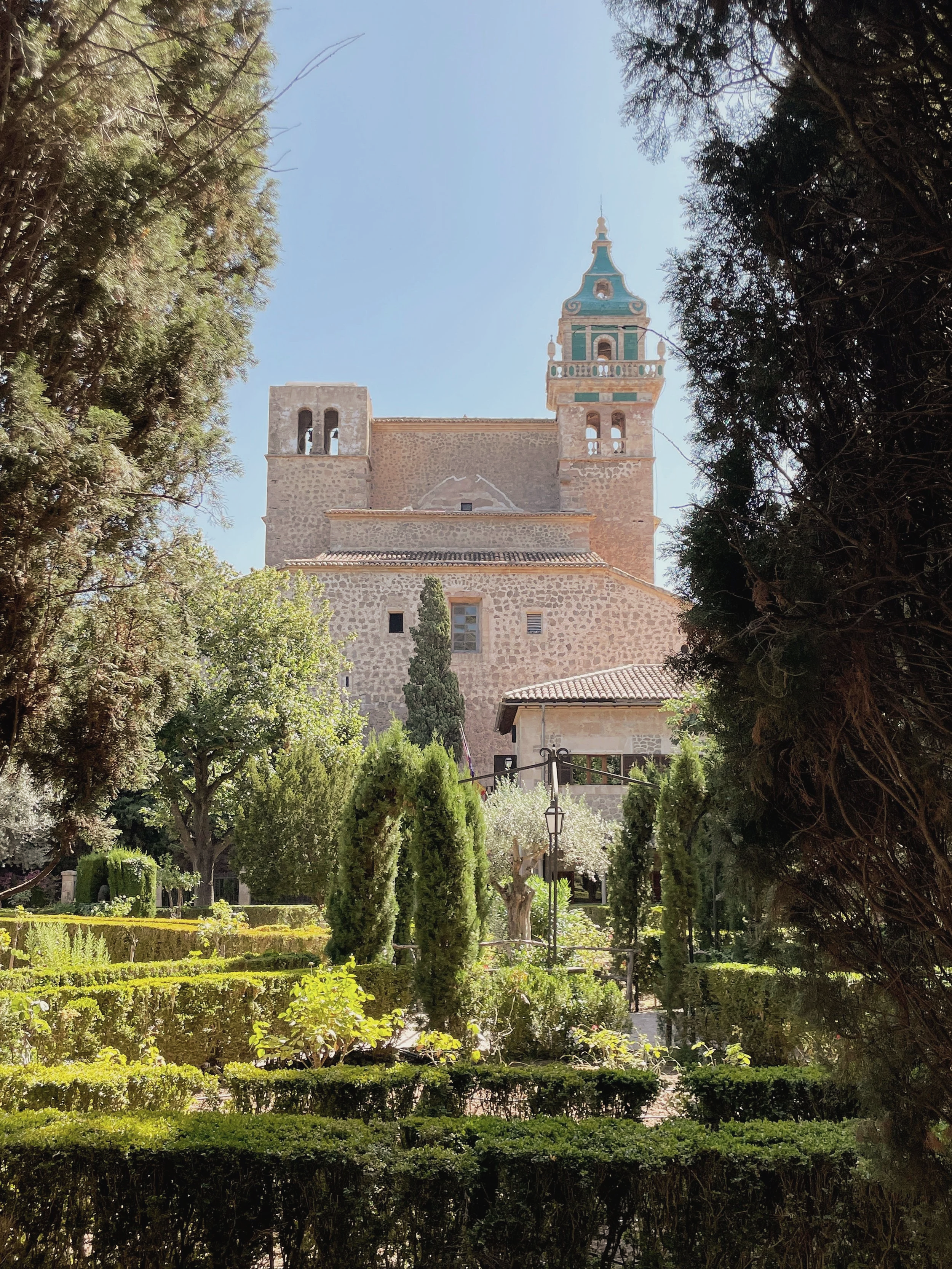
Jardins Rei Joan Carles and La Cartoixa de Valldemossa
What to See
A short walk from the car park, you will find Visit Valldemossa on Avinguda Palma (the visitor information centre) where you can pick up some information or a map of the village. There are public toilets located here too.
Cartoixa de Valldemossa
The Carthusian Monastery is the main attraction. Originally built as a royal summer palace in 1309, and gifted to the Carthusian order in 1399, with the baroque church and its verdant-tiled tower added in 1750. The history of the monastery is interesting, and it is well worth a visit. The gardens are free to enter and worth a wander too (see below). Chopin’s bust sits quietly among the hedges as a reminder of his stay here.
Inside, there is a museum dedicated to Chopin and George Sand’s turbulent winter here in 1838/39, when Chopin composed some of his most celebrated works. But note, that to visit his actual cell (Celda No. 4 - see below) where his original Pleyel piano is displayed, you must pay an additional fee. However, there are other notable former residents of the Cartoixa to discover as part of the general admission, if you prefer not to pay the fee. They also host piano recitals daily, which are included with the ticket.
Hours: M-F 10.00 to 17.00, Saturdays 10.00 to 16.00
Tickets: General - Adults €12.50, seniors (65+) €10, children under 10 free
The piano recitals (15 minutes) included in the ticket take place at:
10:30, 11:30, 12:30, 1:15 p.m., 2:15 p.m
Time: Approximately 1-2h
Palau del Rei Sanç
The Palace of King Sancho is part of the same complex and is included in your monastery ticket. This is actually the oldest part of the site, built on the foundations of the original Arab fortress in 1309 by King Jaume II as a residence for his son Sancho, who suffered from asthma, in the hope that the mountain air would help him. The palace is still partly privately owned, so you cannot see all of it, but the rooms that are open have richly decorated interiors and painted ceilings. There is an option to climb the tower for an additional €3, which offers views down the valley to the sea.
Chopin’s Cell
Inside the monastery, Cell No. 4 is where Chopin and George Sand spent the winter of 1838/39. The three rooms are small and simple, as you would expect of former monks’ quarters, but what happened here was anything but ordinary. This is where Chopin composed several of his most celebrated works. His original Pleyel piano is still in the room, along with manuscripts, personal letters, and the museum frequently holds events such as the Festival Pianino, which runs throughout the year. The programme of events for 2026 can be found here. The cell is located within the Carthusian Monastery, but this museum is independent of it, so you need to pay to enter.
Hours: Open 7 days per week, 09.00 to 17.30
Tickets: Adults €6, children under ten €3, purchased at the site.
Time: 20-30min
Jardins Rei Joan Carles
The King Juan Carlos gardens sit just behind the monastery on the Plaça Cartoixa. They are small but perfectly formed, and they are free and a pretty, shaded oasis away from the bustle of the streets. Narrow paths wind between Mediterranean plants and hedgerows, with sculptures half hidden in the greenery. Chopin’s bust can be found here, too.
Beyond the Monastery
Costa Nord
This cultural centre on the Avinguda de Palma, is opposite the visitors centre. It was founded by Michael Douglas, who has been a part-time resident in the area for years. There is a short film narrated by Douglas about Valldemossa, the Tramuntana and Archduke Lluís Salvador of Austria, the nobleman who spent much of his life preserving this corner of the island in the late 1800s. They also host events and exhibitions, so be sure to check out what is happening. It is easy to walk past without realising what it is, but it adds useful context to the wider area, particularly if you are planning to visit Deià or Sóller.
Barrio de la Vall
Beyond the main tourist area, the old village streets are where the real character lives. The Barrio de la Vall sits in the lower part of the village and is the oldest quarter of Valldemossa. With its flower-lined cobbled streets, it is a wonderful place to explore, quiet and unhurried, with the 13th century Iglesia de Sant Bartomeu, the house and chapel of Santa Catalina Thomás, the tiles bearing her name, and other treasures tucked away within it. If you have time for only one walk in Valldemossa, make it this one. For more on the village’s deeper layers, read my full editorial piece on Valldemossa.
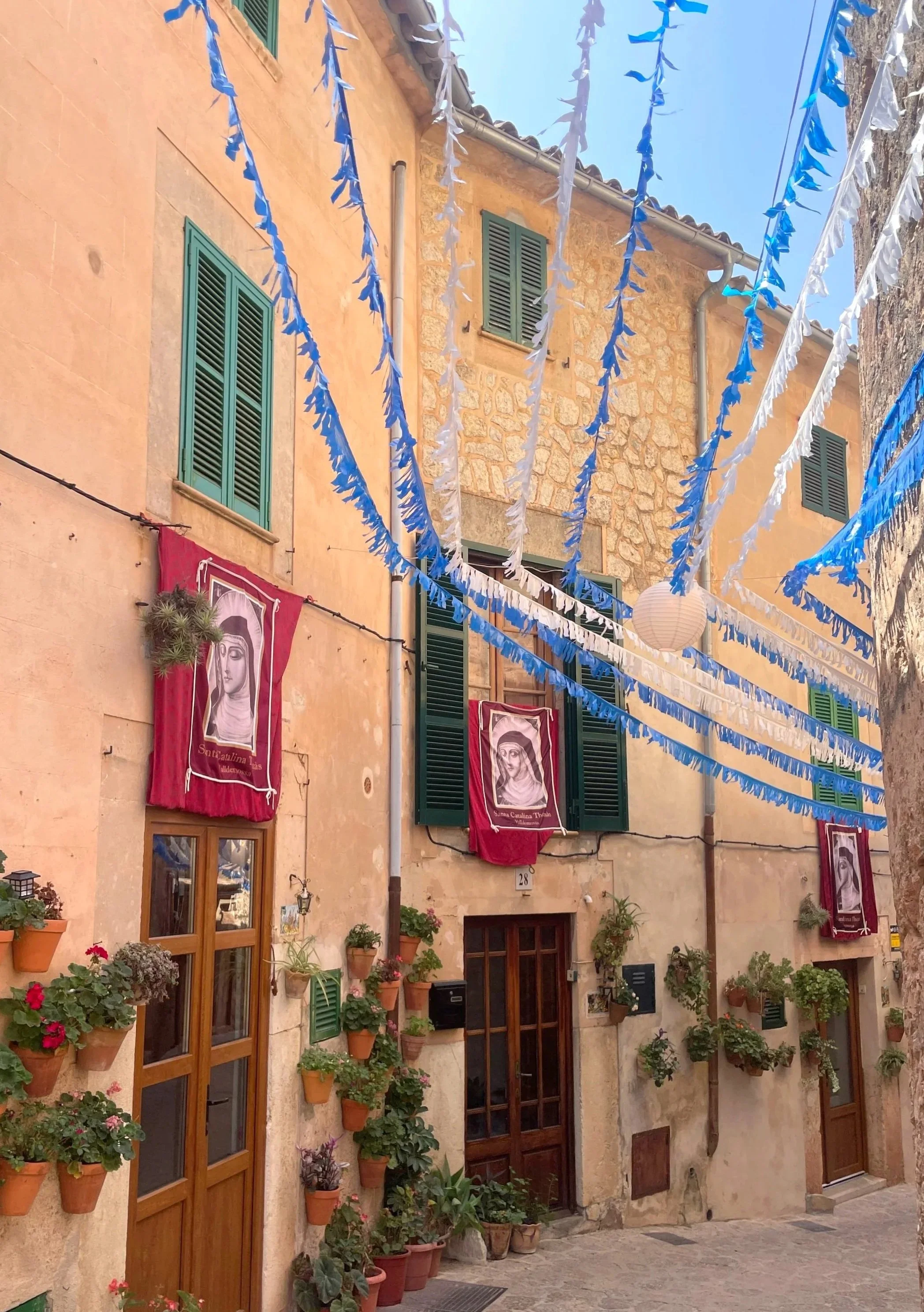
Valldemossa’s Barrio de la Vall.
Mirador de Miranda des Lledoners
This viewpoint is a short walk from the centre of the village. Follow the Carrer de Jovellanos from the Plaça Ramon Llull (opposite Cappuccino) and within a few minutes you will be rewarded with views down the valley and across to the Barrio de la Vall. From here you can see the full sweep of the terraced landscape, the old quarter’s rooftops, the church of Sant Bartomeu, and the mountains rising behind them.
Son Marroig
Son Marroig sits on the coastal road between Valldemossa and Deià, about seven kilometres from the village. Some of the estate dates back to the 15th century, but has become known as the home of Archduke Ludwig Salvator of Austria, who purchased the estate in 1875 and lived here for 41 years. The Archduke was a scholar, conservationist and passionate advocate for the Balearic Islands, and it was from the estate's Carrara marble temple overlooking the Sa Foradada peninsula that he wrote much of his masterpiece "Die Balearen," a 6,000-page study of the islands. Inside the house, now a museum, you can see his personal belongings, maps, drawings, original furniture and an impressive art collection. The views from the gardens across the Mediterranean are among the finest on the island, and the estate is also a popular wedding venue (and as such, check opening hours before you go).
Hours: Open M-S, 9.30am to 2pm & 3pm to 5.30pm
Tickets: Adults €4, children up to 12 are free
Time: 45min-1hr
Where to Eat and Drink
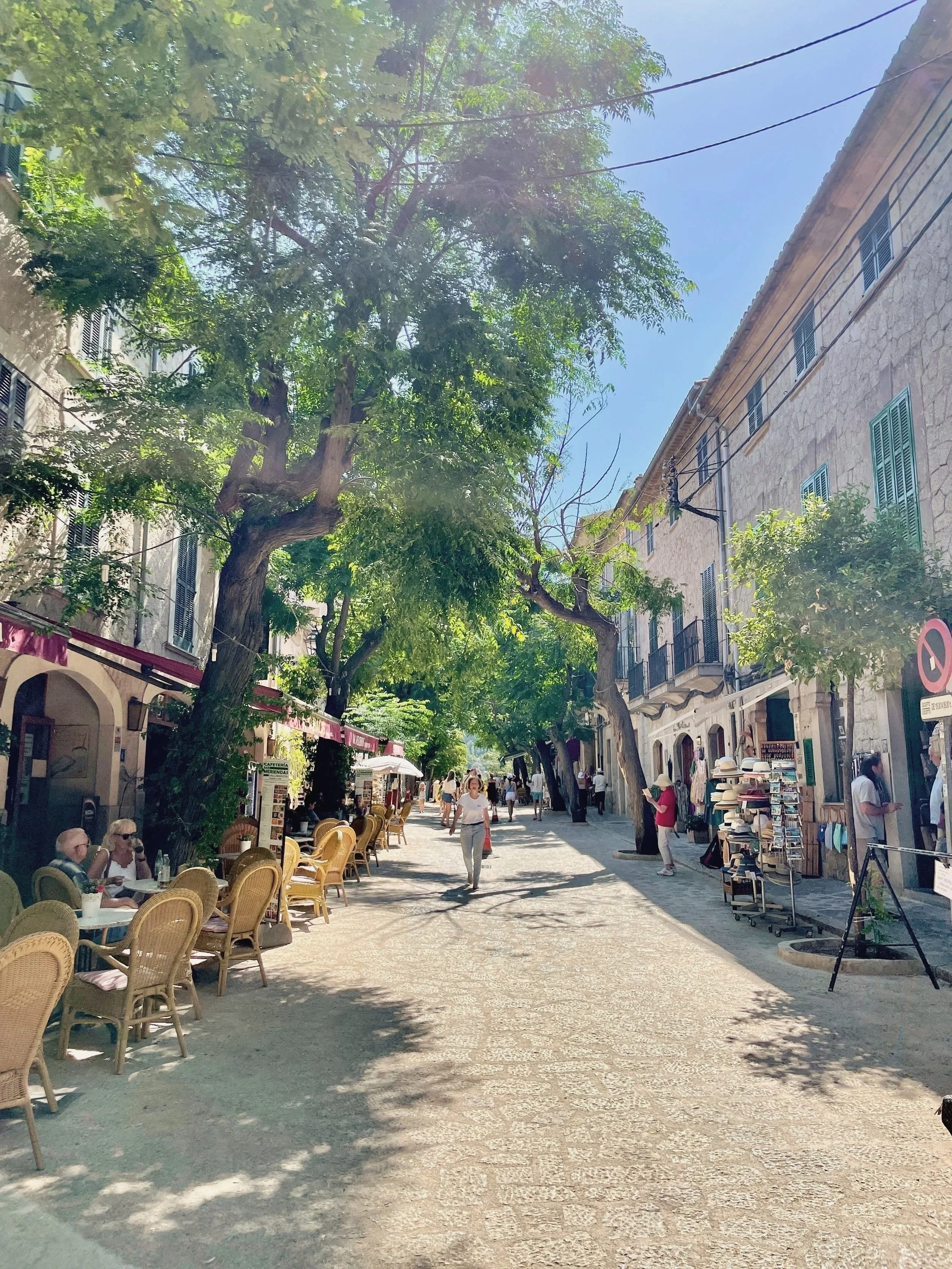
Via Blanquerna, Valldemossa
The cafes and restaurants line the main street, Via Blanquerna, and the surrounding lanes.
€ budget friendly | €€ mid-range | €€€ splurge
€
Ca’n Molinas
…is the one everyone talks about, and for good reason. This bakery has been open since 1920 and is the home of Valldemossa’s most famous delight: the Coca de Patata.
These are soft, pillowy rolls made from a simple dough of potato, egg, sugar and lard, dusted with powdered sugar. The potato gives them a unique light texture. Best served with coffee, hot chocolate or an ice-cold almond granizado in summer. While you can find these elsewhere in the village, some say only this bakery knows the original recipe.
This place gets busy, so be prepared to wait, and I recommend going early. If you are lucky, you might get a table in the little tree-shaded courtyard at the back of the café. And if potato rolls are not your thing, there is also a delicious variety of Mallorquín treats on offer.
€-€€
QuitaPenas
Tucked away on Carrer Vell in the old part of the village, is QuitaPenas. The building is a typical Mallorcan townhouse with over 300 years of history. From the early 1900s until 1978 it served as the village’s main grocery store, run by a local known as “Tio” (uncle) Jordi. It sat empty for four decades before reopening in 2019 as a restaurant specialising in Pa Amb Oli, Mallorca’s signature dish of toasted bread rubbed with garlic, local Ramallet tomatoes and olive oil from the Tramuntana, and topped with a variety of delicious combinations. Simple food done well, recognised by Lonely Planet, Elle and Guía Repsol. Unpretentious and very Mallorquín. We could not get a table here (but it is at the top of my list for my next visit), so it pays to book ahead.
€€-€€€
Cappuccino ValLdemossa
…sits on the Plaça Ramon Llull and is part of the Grupo Cappuccino chain, which has cafes and hotels across the island’s most prominent locations. Expect polished interiors and smartly dressed waiters with prices to match. The terrace is a great spot for coffee and people-watching, and some tables even offer a teeny peek of the Carthusian Monastery. Food here has mixed reviews, and having eaten at their Pollença, Portáls and Palma locations, I would agree that you’re not missing much if you choose not to eat here. However, it is a nice spot for a coffee stop.
€-€€
Ca’n Costa
On the Carretera Deià about two and a half kilometres outside the village centre, surrounded by the Tramuntana, is Ca’n Costa. The restaurant reopened in 2020 under new ownership and focuses on traditional Mallorquín cooking with local, seasonal produce. The grill is central to the kitchen, and the menu leans towards meats, fresh fish and regional staples, and they grow some of their own ingredients on-site. The setting is rural and relaxed, with mountain views from the terrace, and it feels like a proper lunch or dinner destination rather than a quick stop between sights. Best reached by car (there is a car park right outside), but the bus from Valldemossa to Deià also stops right outside. I have driven past it many times on the way to Deià, but never managed to get a table. Two friends have independently recommended it for traditional Mallorquín cooking, so it is high on the list for next time. As such, it is worth booking ahead, especially in summer.
€€
Es Taller
Es Taller is well regarded and is located around a 5-minute stroll from the main street in a converted mechanic’s garage. The space is airy and modern, with big windows and a terrace. The chef, Nicolás Gago Aubert, serves seasonal Mediterranean food with an international touch. Think tapas, ceviches, local meats and fresh seafood. Everything here was delicious! They grow their own herbs and vegetables in a garden on-site, too. It is popular, so book ahead!
€
Orígenes
A small local bar away from the hustle and bustle. This was a great pitstop when we were exploring the village in the heat, which you can read about here. It is a solid local offering with friendly service, the kind of place you find when you get away from the crowds.
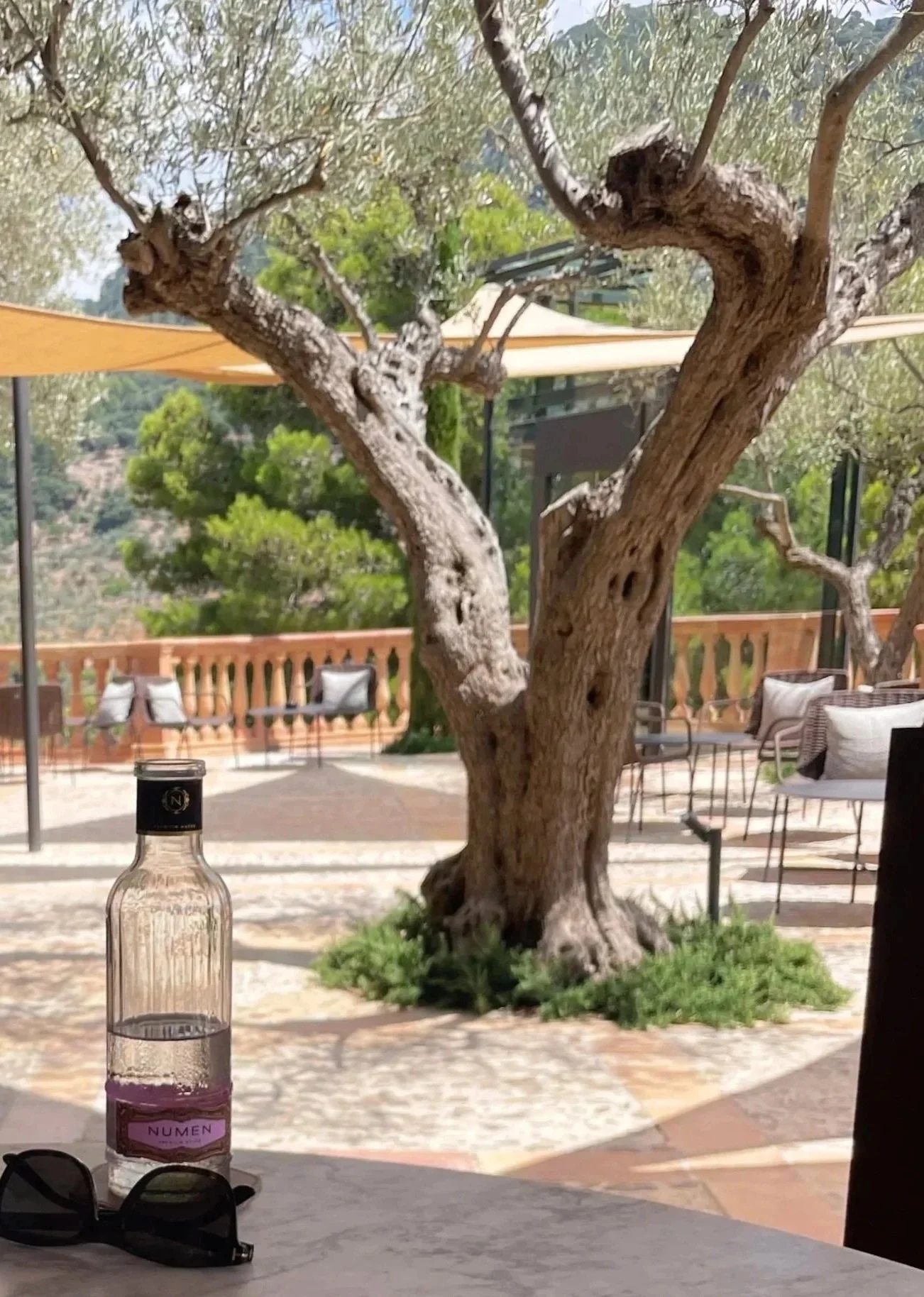
The terrace at De Tokio a Lima, Valldemossa
€€€
De Tokio a Lima at Hotel Valldemossa
De Tokio a Lima is the standout for me. We visited for lunch at the end of July, and everything was exquisite. The restaurant sits within the hotel and looks directly across to the monastery, or down the valley, depending on which terrace you are seated. Before we went, I read some reviews complaining that the view was not all it was cracked up to be, but I found it wonderful. The vibe at lunch was serene, with only a few other diners, and the service was attentive without being overbearing.
The food is Nikkei, a fusion of Japanese technique and Peruvian flavour, with local Mallorcan ingredients running through everything. The menu is built around ceviches, tatakis and seafood, alongside a strong cocktail list (my husband said it was the best Negroni he had ever had). The interiors are chic and minimal, and it gives proper ‘restaurant’ rather than ‘hotel dining room’.
Book in advance, particularly for dinner.
If you are driving, ignore whatever your sat-nav tells you. Ours tried to route us through the village centre, which was a mistake. The correct approach is off the Ma-1110 coming up from Palma. The turn is signposted, and from there it is roughly a kilometre along a winding single-lane road up to the hotel. There is a gated car park with an intercom entry system, so if you have a booking, they will buzz you in.
One thing worth knowing: the road to get to De Tokio a Lima road is classified as ACIRE, meaning it is restricted to residents only, and using it without permission will result in a fine. The hotel can register your number plate to avoid this, but they will not mention it unless you ask. I didnt think of it at the time, so emailed the hotel later the same day.
Where to Stay
Hotel Valldemossa (5 star)
For something special, this adults-only hotel is set into the hillside with views across the valley and the monastery. It makes for a memorable stay, with French mid-century-inspired interiors in a historic manor house and a range of wellness offerings. There are two pools, a gym, and a spa, with pilates, yoga, and personal training available. Its restaurant, De Tokio a Lima, alone is reason enough to book a night here, but the hotel is within walking distance of the centre of Valldemossa if you prefer to try local restaurants. If you are hiring a car, there is a car park on site, which is a bonus given that finding parking in Valldemossa is no easy task.
Hotel Mirabó de Valldemossa (4 star)
A more family-friendly option, Hotel Mirabó is a nine-room boutique finca set into the hillside. Located within an olive farm, the finca dates back to the early 16th century and has been carefully restored with natural materials, soft colours and a mix of original features and modern comfort. There are two pools, including an infinity pool with views across the valley to the mountains, and the restaurant serves Mallorcan home cooking, often based on family recipes and using local produce. The name gives it away: Mirabó translates loosely as “beautiful views”, and sitting at 500m altitude and 2km from the village, you will probably want a car or taxi to get to Valldemossa and further afield.
Es Petit Hotel de Valldemossa (3 star)
Es Petit is an adult-only boutique hotel right in the heart of the village, just steps from the monastery. It has just eight rooms, each individually furnished, and a terrace bar with views across the valley to the mountains. Breakfast is served on the terrace and is well-regarded. It is a simpler option than the hotels on the outskirts, but the location means you can walk out of the door and be in the old streets immediately. No car park on site, so you will need to use the village car parks.
Worth noting is that the same people running Es Petit have recently taken over the nearby Marton Turisme de Interior. Similarly housed in a historic building, this sister hotel has been recently renovated in a chic and modern style, and includes breakfast on the terrace at Es Petit. This boutique hotel is getting rave reviews for comfort, the friendly staff, decor and delicious breakfast.
For something more independent, there are well-reviewed holiday rentals in and around the village.
Valldemossa also works perfectly as a day trip from Palma, Sóller or anywhere else on the island. Just twenty five minutes from the capital by car, and also on the 203 bus route, you do not need to stay overnight to do it justice.
Shopping
Valldemossa has many boutique stores selling clothes, shoes, jewellery and other accessories with a distinct Mallorcan and Mediterranean feel. They are mostly dotted around the top part of the village and the main street, but you can also find some lovely shops on Carrer de Jovellanos, Plaça de Cartoixa and in the Barrio de la Vall.
Mimossa on Carrer de Uetem stocks a curated collection of women’s clothing with an island vibe, and has some exquisite pieces.
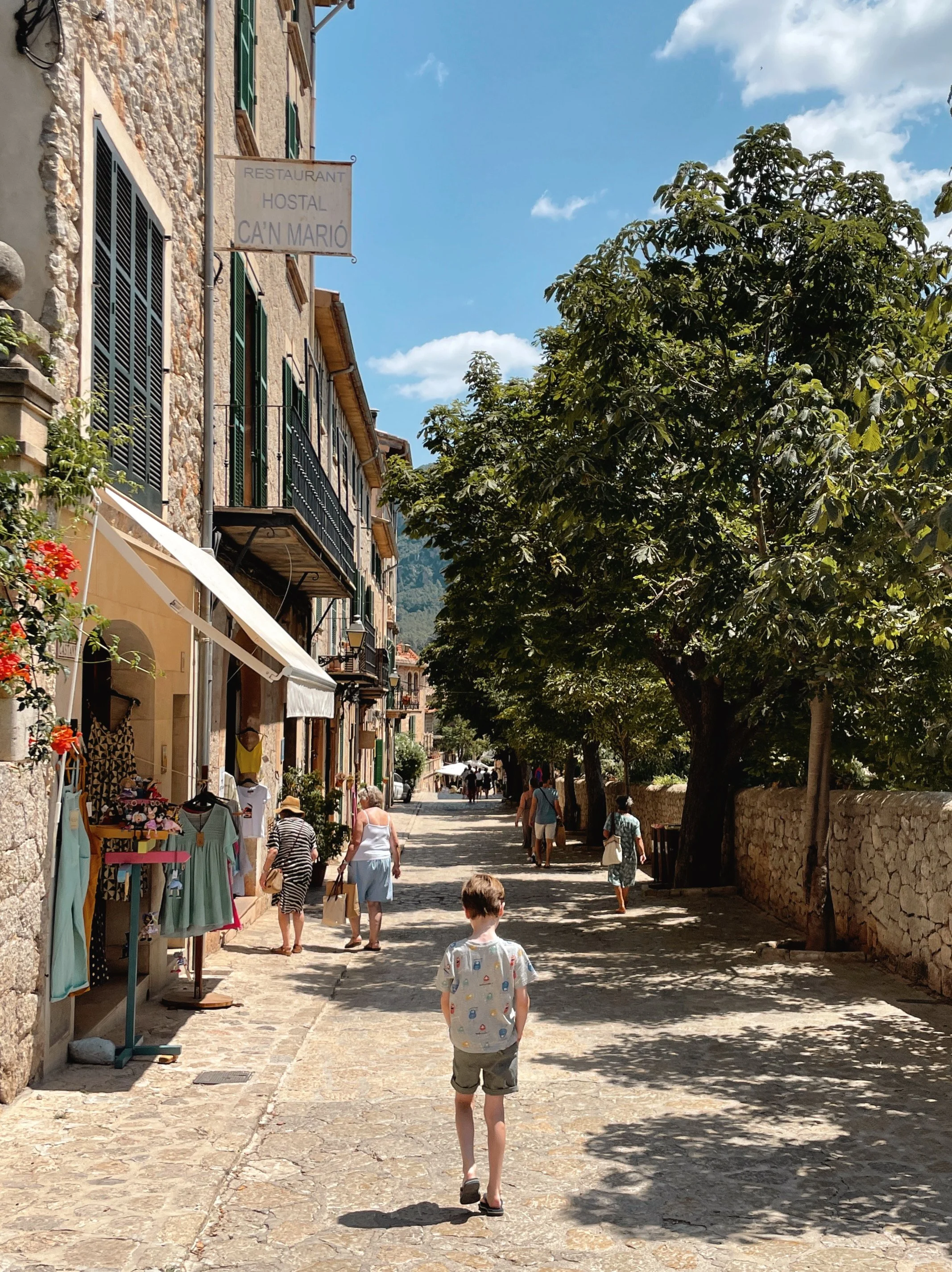
Carrer de Uetem, Valldemossa
Definitely check out SONMO on Plaça Bartomeu Estarás, the boutique of local estate Son Moragues. They produce olive oil, olives, and tomatoes on the estate, all with tradition and sustainability at the heart of what they do. The shop itself is lovely and worth a browse even if you are not buying. They also offer experiences at the estate and in-store, including olive oil tastings and picnics.
A little out of the centre, Obsolete specialises in bespoke furniture made from recycled wood, alongside curated vintage pieces and antiques. Designers like Matthew Williamson are known to source from here. There are also branches in Deià and Palma. The Valldemossa shop is on Avinguda Arxiduc Lluís Salvador and is sometimes open by appointment only, so check ahead.
For more practical things, there is everything you need, including a small Coaliment supermarket, a bank, and a pharmacy. They are all located in the centre of the village.