A Guide to Cala Deià: Mallorca's famous cove
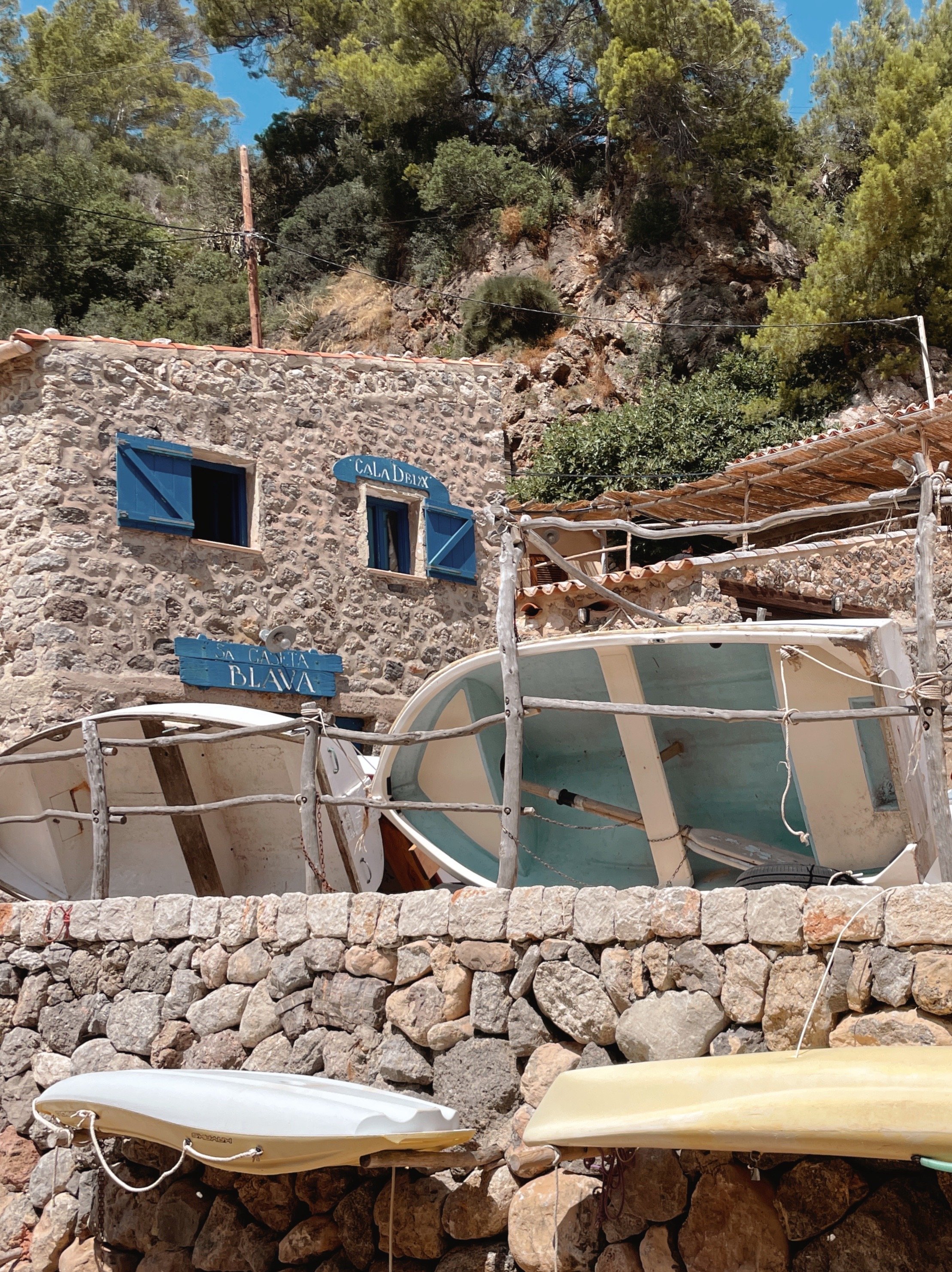
Cala Deià, Mallorca
The Essentials...
- You can reach the small rocky cove beneath the village of Deià on foot, by car or boat
- Parking is very limited, so come early or walk down
- There are almost no facilities, except for the two restaurants in the cove: Ca's Patró March and Ca'n Lluc, so bring everything you need
- For more on Cala Deià, read Cala Deià: Is It Really Worth It?
Cala Deia is the small rocky cove that sits below the village of Deià, on Mallorca's north-west coast. It is a lovely place to swim, with a narrow inlet of clear water between cliffs, and a couple of restaurants built into the rocks with views to boot. But it's not the easiest place to reach.
This guide covers everything you need to get there and make the most of it: how to walk or drive down, where to park, what to expect from the cove itself, and the two places to eat when you arrive.
In This Guide:
When to Visit
Cala Deià is popular. I advise visiting Mallorca out of high season, but if you want to enjoy the cove for swimming and snorkelling, the hotter months are best. However, shoulder season can still bring warm weather.
July and August are high season; the water is lovely, but the car park fills fast, the restaurants book up, and the little cove gets crowded by morning. Towards the end of September, though, the island starts to see fewer visitors and the daytime temperatures can still reach the high twenties.
Whatever time of year you visit, get there early. The cove is quieter, and the whole place feels more special before the crowds arrive. Swim first, and then linger at a table overlooking the water with fresh seafood for lunch.
Deià Weather, Month by Month
Deià has a Mediterranean climate: hot, dry summers, but winters can get cold in the mountains.
Getting There
There are three ways to get to the cove, and your choice shapes the day. None of them is effortless, which is part of why Cala Deià stays so unspoiled.
On Foot
The route begins in the village and follows the main road to Sóller. It then follows the narrow, winding road down to the cove through olive terraces and pine forests, and takes around 30 minutes (note: there is no footpath). It’s an easy enough descent for most people, but remember that you have to come back up! The return journey is steep and tough in the hot sun. Wear proper shoes and have water with you.
By Car
The drive down is along a narrow road marked for Cala Deià, branching off the Ma-10 towards Sóller. There are some tight bends; it is mostly single-lane, and no easy place to pass or turn around once you’ve committed, but the road is in good condition.
There is a small paid car park close to the cove, but it fills quickly. We came by car in high summer and made sure we were there before 10 am. There were plenty of spaces when we arrived, but they filled quickly and were taken in the time it took to feed the pay machine.
By Boat
The most scenic arrival is by boat from Port de Sóller, about 30 minutes away. A boat avoids the parking issue entirely and lets you swim, snorkel, and come ashore for lunch.
However, although previously not required for small boats, from 1 October 2026 anyone renting a motorboat or recreational vessel in Spain must hold a valid navigation license. If you don’t have a license, you will need to hire a skippered charter.
Parking
Parking is the thing most likely to complicate a visit. The car park is modest in size and tends to fill early. Once full, the access barrier at the top of the cove road comes down, and non-residents are left waiting for a space to become available.
In peak summer, it can effectively shut visitors out by morning, but it saves driving all the way down to find there’s no spaces. The simplest solution is to arrive early or walk from the village.
The Cove itself
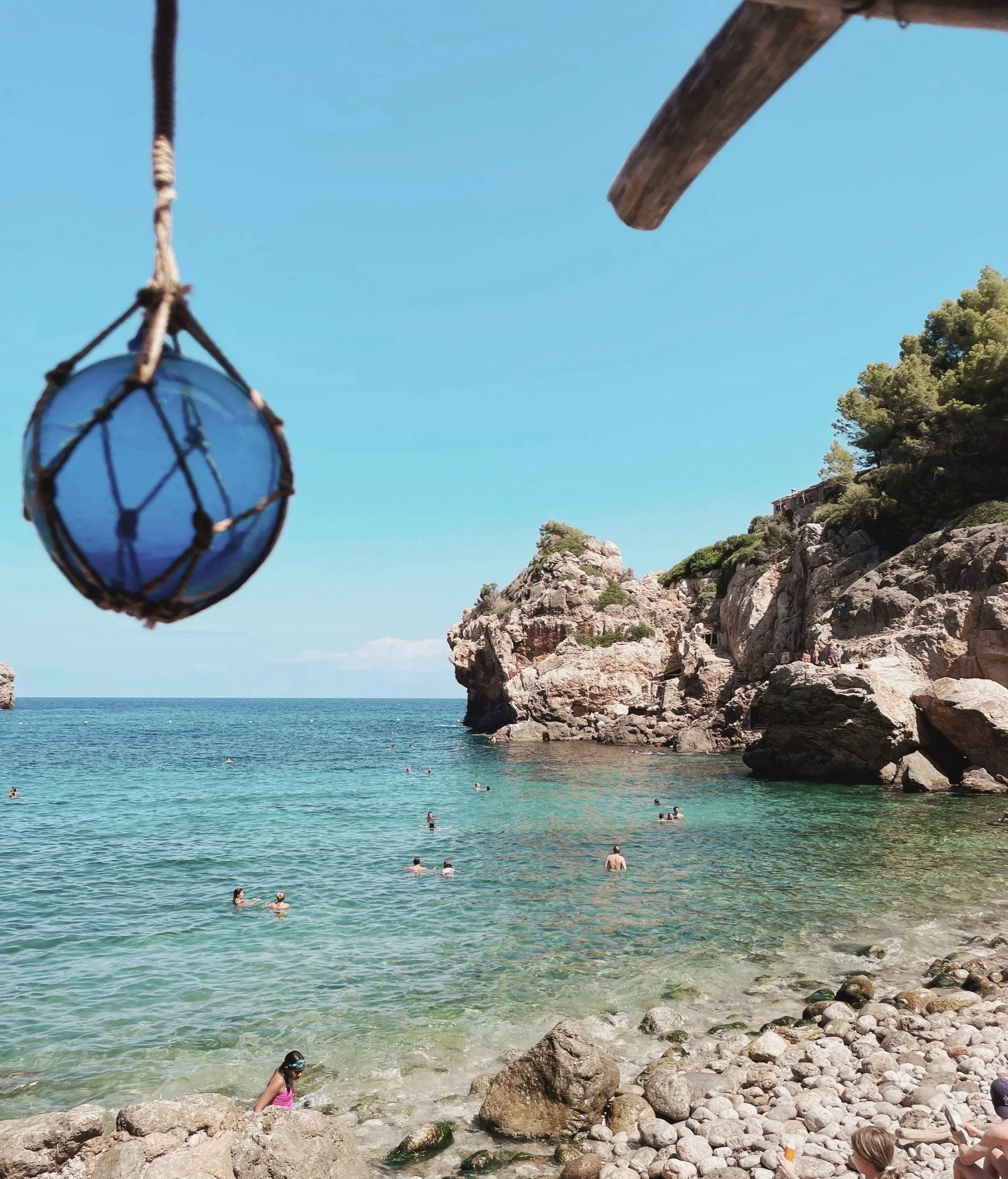
Cala Deià is not a beach for spreading out on a towel all day. It’s a small, stone-and-pebble cove, and it’s a great place for a swim. The water is crystal clear, and the rocky setting makes it excellent for snorkelling.
Facilities are minimal. There are no sunbeds, no rented parasols, no showers, and no lifeguard, and the only toilets are at Ca’s Patró March (for patrons only) or a public toilet at the entrance to the cove (which wasn’t in great shape when we visited!)
Bring what you need: water, sun protection, a towel, and ideally swim shoes, since the stones are hard underfoot and the water entry is rocky. Also, be aware that there is no natural shade.
One thing worth knowing: jellyfish do appear here from time to time. If there have been reports of jellyfish in the bay, there will be a flag near Ca’s Patró March, but always be aware even if there is no warning flag. While a sting is usually more painful than serious, it pays to be vigilant - another good reason to keep a snorkel mask handy.
Where to Eat and Drink
Half the appeal of Cala Deià is the waterfront meal, and the two restaurants give you delicious options for dining.
€€-€€€
Ca’s Patró March
The better-known of the pair. Perched above the water, Ca’s Patró March has been in the March family since 1960 and became famous as a filming location for the BBC’s The Night Manager.
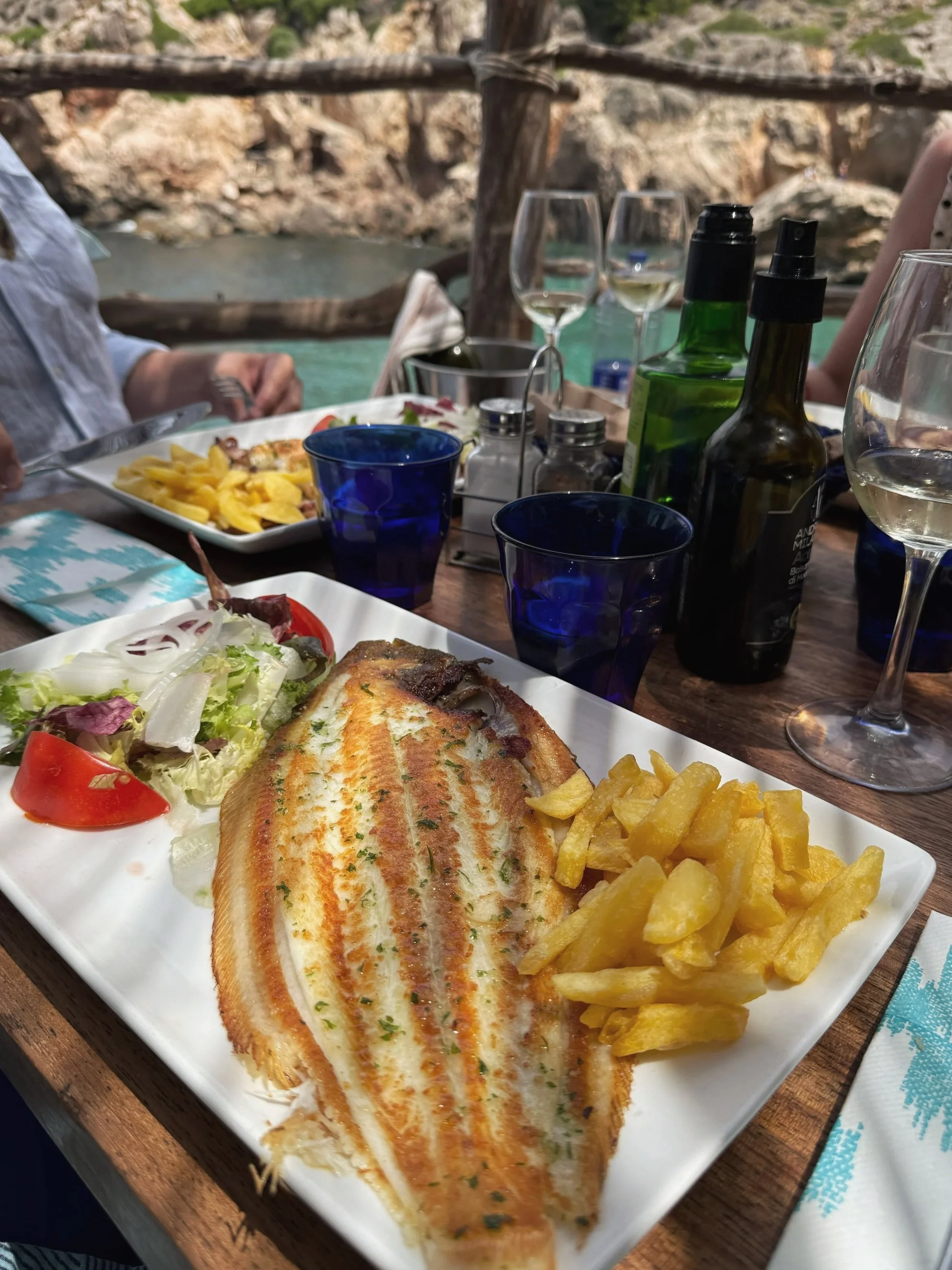
The setting is striking, and the food focuses on seafood and a few Mallorcan dishes. This is simple, well-prepared food and doesn’t pretend to be anything else. We enjoyed calamares fritos and fresh rodaballo (turbot), which came served with hand-cut patatas, and all washed down with a Mallorquin white wine.
It only opens during the warmer months (March to late October/November). It’s small and in high demand, so booking ahead is essential. Tables are released only a short time in advance (only for the week ahead) and disappear almost instantly - especially waterfront tables, so don’t leave it to chance. There are inside tables as well, so be aware of what is offered to you at the time of booking. Turning up in summer without a reservation can mean a very long wait or no table at all, but it is possible to get one. There were people without reservations getting tables on the day we were there, but they may have been indoors. Cash is often the safest option because the signal is weak down here, so bring enough with you.
Lunch at Ca’s Patró March
€-€€
Ca’n Lluc
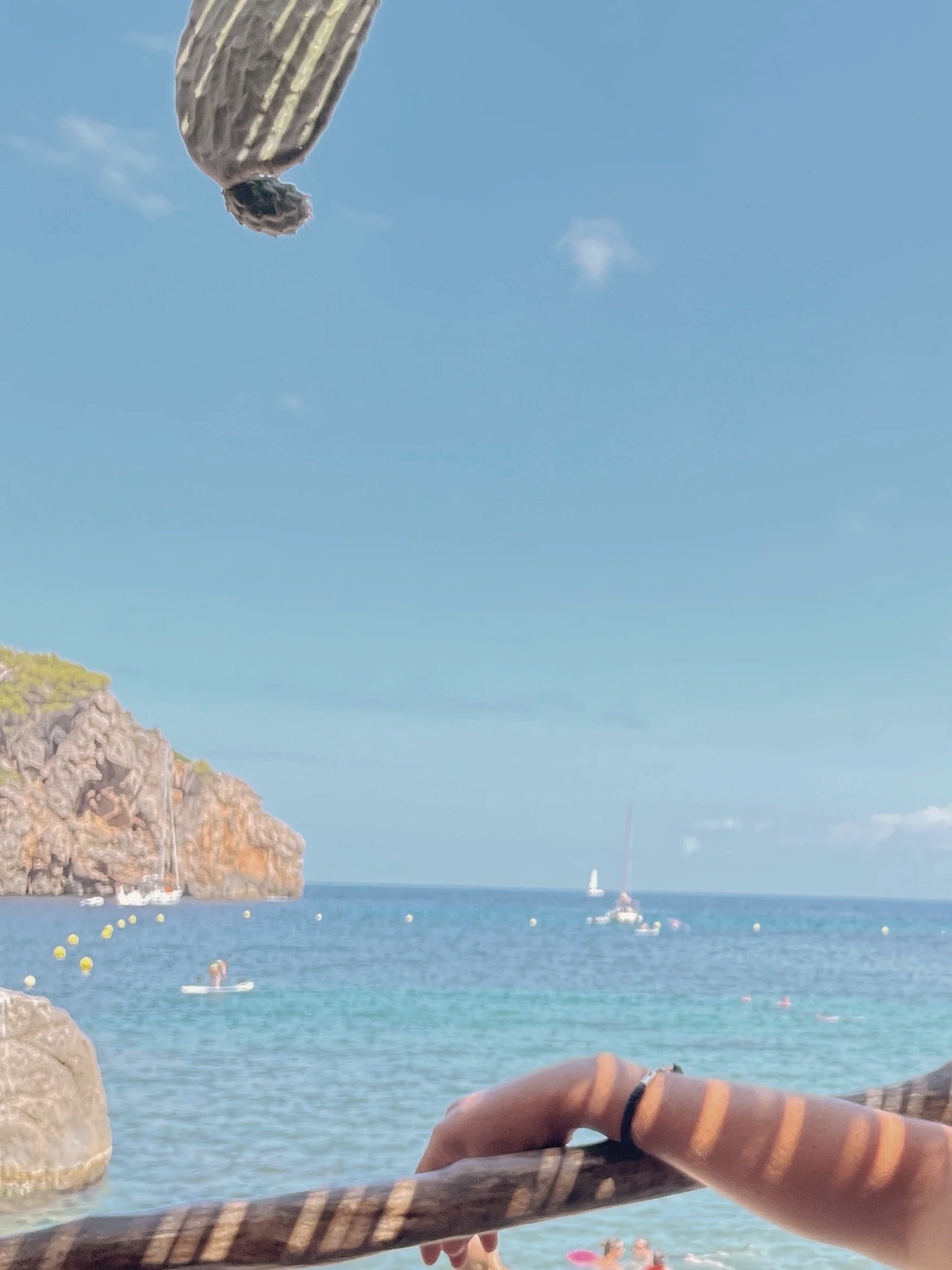
If I’m honest, I didn’t know there was another restaurant sharing this little cove until I visited for the first time. Without the hype of its famous neighbour, Ca’n Lluc sits a little lower, just above the beach itself and feels more low-key. It also serves seafood and straightforward Mallorcan food without much fuss or fame. The atmosphere is easygoing, making it a good spot for a long lunch between swims.
Though it is tiny, we managed to get a table for drinks an hour or so before our reservation at Ca’s Patró March. We enjoyed a jug of sangria cava, still in our swimmers, and it felt as though we had never left the beach. On our next visit I would be keen to try a long lunch here too.
The view from C’an Lluc
Where to Stay
Cala Deià has a handful of homes perched above the cove and dotted along the road down to it. A few are available as holiday rentals, but otherwise, the nearest places to stay are up in the village of Deià itself. Some hotels in the village, such as Belmond’s La Residencia, have a free shuttle down to the cove.
The advantage of staying at the cove is that parking should no longer be an issue. But if you want to explore the village above you’re going to have to walk up, or drive and find a car park there instead.
Check out holiday rentals at Cala Deià on the map below, such as Villa Ca La Dolors, which has 4 bedrooms, parking, wifi and a hot tub perched perfectly on the rocks above the cove.
For more on the village above, read the guide to Deià, or all about Deià itself. If you are exploring the area, also check out the Valldemossa guide.